When Disney handed Epic Games $1.5 billion in early 2024 for an equity stake, it wasn’t because Bob Iger wanted to play Battle Royale on his lunch break. It was because Fortnite had quietly become one of the most valuable marketing platforms on the planet, and the House of Mouse wanted in before the door closed.
Fortnite’s Collaboration Empire
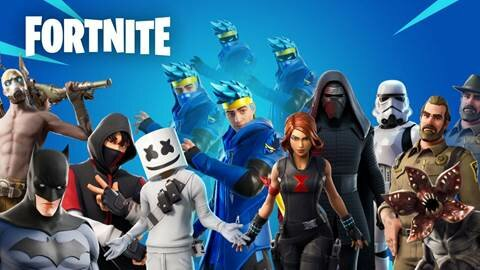
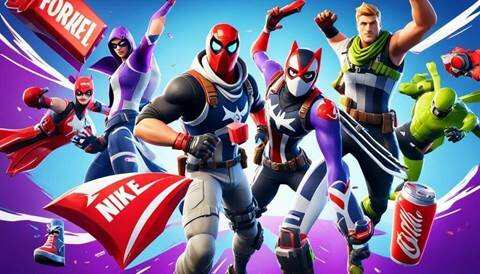
Fortnite is no longer a battle royale game. It’s a persistent entertainment venue where Marvel characters trade punches with Star Wars troopers, where Travis Scott can headline a stadium that holds more than 12 million people at once, and where a teenager in São Paulo can buy a Ferrari skin for the same price as a burrito. Epic Games figured out something most publishers still haven’t. When you build a platform popular enough, the brands come to you instead of the other way around.
The numbers back it up. Fortnite is projected to clear roughly $6 billion in revenue by the end of 2025, with more than 650 million registered players globally and roughly 110 million monthly active users. That scale puts it ahead of most streaming services, most theme parks, and virtually every individual film franchise currently in production. The Fortnite community isn’t a niche anymore. It’s a country.
Fortnite’s Marketing Success
Before getting into the mechanics of how brand partnerships actually work inside Fortnite, it helps to see the footprint at a glance.
| Metric | 2025 Figure |
| Projected annual revenue | ~$6 billion |
| Registered players | 650+ million |
| Monthly active users | ~110 million |
| Estimated daily revenue | $16 to $17 million |
| Record live-event concurrent players | 14+ million (Remix: The Finale, Nov 2024) |
| Disney’s equity stake in Epic Games | $1.5 billion (Feb 2024) |
| Battle Pass price | 950 V-Bucks (~$7.99) |
Each of those numbers points to a specific lever Epic Games can pull when a new collaboration hits the calendar.
The Fortnite x Marvel Collab
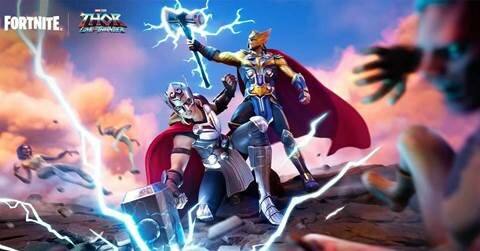
Marvel was the proof of concept. The Nexus War finale in 2020, where Galactus appeared above the Fortnite map and players fought him off in a live event, drew more than 15.3 million concurrent participants. That single Sunday afternoon outperformed almost every live TV broadcast of the year. Once Epic Games proved it could turn a licensed crossover into a cultural moment of that magnitude, every major studio in Hollywood started paying closer attention.
Since then, the Marvel rotation has become a near-permanent fixture inside the Fortnite universe. Players cycle through Wolverine skins, Iron Man mythics, and limited-time modes tied to film releases. The collaboration works in both directions. Marvel gets a month of free promotion in front of Gen Z eyeballs that don’t subscribe to cable, and Epic Games gets exclusive skins that sell by the millions at $15 to $25 apiece.
Star Wars slots into the exact same template. Every May the Fourth, Fortnite rolls out lightsabers, new skins, and limited-time event modes timed to whatever Disney+ show is about to drop. That is not a coincidence. That is the calendar doing its job.
Live Events as Limited-Time Marketing
The in-game concert series might be Fortnite’s most underrated invention. Travis Scott’s Astronomical event in April 2020 drew 12.3 million concurrent players and is still recognized by Guinness World Records as one of the largest virtual music events ever recorded. Eminem’s Big Bang broadcast in late 2023 shut down the Fortnite Chapter 4 storyline in one explosive set piece. Remix: The Finale in November 2024 topped them all with more than 14 million concurrent players in a single live show.
These in-game events are not just entertainment. They are time-boxed brand activations dressed up as spectacle. Each one introduces exclusive skins, emotes, and cosmetic items that disappear the moment the event ends. Scarcity creates a sense of urgency; that urgency drives purchases, and those purchases fund the next event. It is a closed loop, and Epic Games has been refining it for six straight years.
The Battle Pass Model Is Profitable
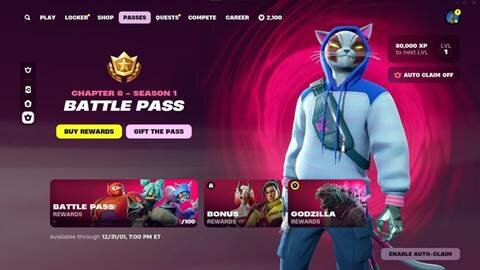
Fortnite introduced the concept of the seasonal battle pass back in 2018, and the rest of the gaming industry spent the next several years copying it. The pitch is simple. Pay 950 V-Bucks at the start of each season, unlock cosmetic rewards as you complete challenges, and walk away with enough V-Bucks by the end to buy the next one. It feels like you are getting a discount. You are actually being enrolled in a subscription.
The genius is that each battle pass becomes its own collaboration showcase. Chapter 5 Season 2 was built around Greek mythology. Season 3 leaned into Mad Max. Chapter 6 has gone full anime. Every season bundles its own themed skins, limited-time challenges, and crossover appearances with external franchises, and players who fall in love with a specific battle pass often treat that account as a collectible in its own right. Some players shortcut the grind entirely by picking up collab-heavy, loaded Fortnite accounts through igitems or its Spanish regional storefront, where rare crossover loadouts move between collectors the way vintage trading cards used to.
The Fortnite Crew subscription pushes monetization one step further at $11.99 a month, bundling V-Bucks, the current battle pass, and exclusive skins into a Netflix-style recurring charge that players barely notice leaving their accounts.
Why Disney Bet $1.5 Billion on Fortnite
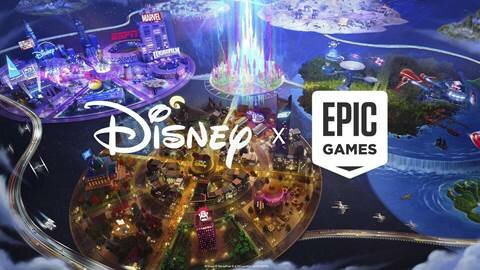
Disney’s February 2024 investment was the moment this stopped being a gaming story and became a media story. The company’s $1.5 billion equity stake in Epic Games came with plans for a persistent entertainment universe in which Disney IP from Marvel, Star Wars, Pixar, and Avatar could coexist with Fortnite’s native ecosystem. The first concrete result surfaced in 2025 with Disneyland Game Rush, a set of theme park-inspired minigames built directly into the Fortnite map.
Why would Disney, a company with its own theme parks and studios, pay to plug into someone else’s game? Because in-game spending hit $125 billion globally in 2023 and is projected to crest $176 billion by 2030, most of it on cosmetic purchases. Disney does not want to build that infrastructure from scratch. It wants the front-row seat, and it is happy to let Epic Games handle the hard parts of running a 650-million-player video game platform.
What Marketers Can Learn From Fortnite’s Model
The marketing strategies inside Fortnite are not magic. There are a few well-executed ideas stacked on top of each other:
● Sell scarcity, not utility. Cosmetic items do not give you a gameplay edge. They give you social status at a specific moment in pop culture. When the moment passes, the skin becomes rare, and rarity carries its own value.
● Bundle brand deals with content. A Marvel skin is a product. A Marvel live event paired with a themed limited-time mode is a cultural moment, and the moment sells the skin.
● Treat the battle pass as a loyalty program. Every season resets the clock, keeps players logged in, and gives external brands a structured window to show up inside the Fortnite community.
● Own the calendar. Every major movie release, album drop, and esports tournament becomes an excuse to run a crossover. Fortnite’s calendar now mirrors the entertainment industry’s calendar, not the other way around.
Replicating Fortnite’s marketing success is harder than it looks. You need a massive player base first, and a platform flexible enough to absorb dozens of franchises without breaking the tone. Most games cannot do that. Fortnite can, because Epic Games built it that way from the beginning.