Marble has long been associated with elegance, heritage, and timeless luxury. From grand European estates to contemporary designer kitchens, its soft veining and luminous surface have made it a symbol of refinement. However, a powerful competitor has emerged in recent year’s quartzite. While the two stones can appear remarkably similar at first glance, their performance in a busy kitchen environment differs significantly.
If you’re deciding between marble and Quartzite worktops, understanding their differences in appearance, durability, and maintenance is essential. This comparison breaks down each factor to help you choose a surface that aligns with both your design vision and your lifestyle.
Visual Appeal: Subtle Sophistication vs. Natural Drama
The aesthetic comparison between marble and quartzite is where many homeowners hesitate. Marble is admired for its soft, flowing veining set against pale white or grey backgrounds. Its appearance is typically gentle and understated, offering a sense of classical charm and European refinement.
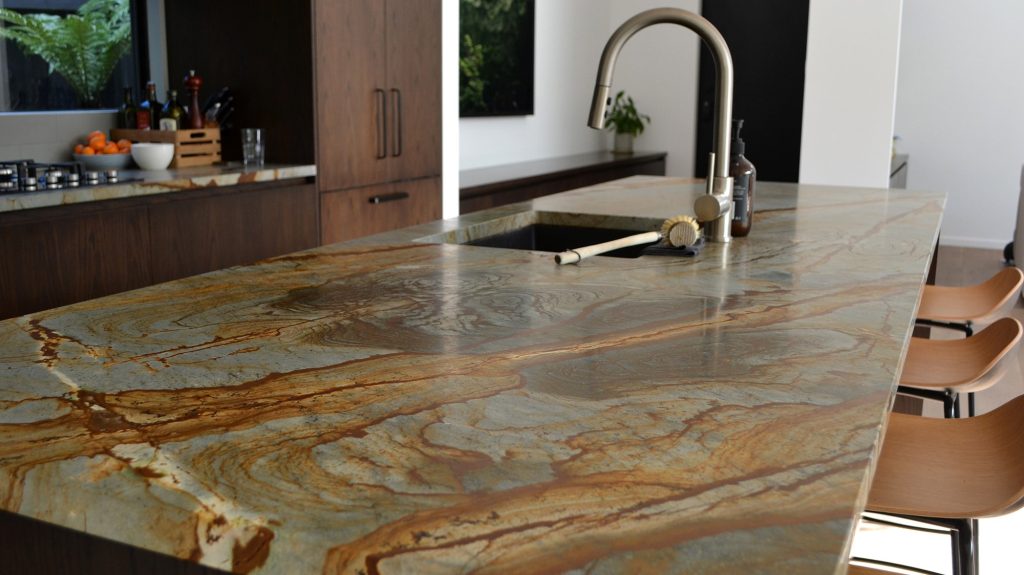
Quartzite, by contrast, often displays more dynamic movement. While some varieties closely resemble marble, others feature bold veining and striking mineral accents in shades of gold, charcoal, blue, or even rust. The surface may have a crystalline texture that subtly reflects light, giving it added depth and dimension.
In essence, marble delivers delicate elegance, while Quartzite worktops tend to offer stronger visual contrast and dramatic natural character. The right choice depends on whether you prefer subtle romance or bold geological artistry.
Strength and Scratch Resistance: A Clear Performance Gap
One of the most important distinctions between these two materials lies in their hardness. Marble is composed primarily of calcite and ranks relatively low on the Mohs hardness scale, typically around 3 to 4. This makes it more vulnerable to scratches and surface wear over time.
Quartzite, formed through intense heat and pressure, ranks much higher between 7 and 8 on the same scale. This significant difference means Quartzite worktops are far more resistant to scratches and everyday abrasion. In a kitchen where food preparation, cookware, and constant activity are the norm, this durability becomes a major advantage.
If resilience is a priority, quartzite clearly outperforms marble in this category.
Etching and Chemical Resistance
Etching is one of marble’s most well-known drawbacks. Acidic substances such as lemon juice, vinegar, wine, or even certain cleaning products can react with marble’s surface, leaving dull marks. These are not stains but chemical reactions that alter the finish of the stone. Repair often requires professional polishing.
Quartzite, on the other hand, is much less reactive to acids. Because it is primarily composed of quartz, it resists the chemical etching that affects marble. This makes Quartzite worktops better suited to busy kitchens where spills may not always be cleaned immediately.
For households that cook frequently or entertain often, this resistance provides peace of mind and reduces the stress of daily use.
Porosity, Staining, and Maintenance
Both marble and quartzite are natural stones and require sealing to help prevent staining. However, their performance after sealing differs.
Marble remains more susceptible to staining from oils and deeply pigmented liquids if spills are not addressed quickly. It also requires careful cleaning with pH-neutral products to avoid damaging the surface.
Quartzite, once properly sealed, is highly resistant to staining. Its density and lower reactivity give homeowners more flexibility and less maintenance pressure. While annual resealing is generally recommended, Quartzite worktops are widely considered easier to manage in an active family kitchen.
In terms of day-to-day care, quartzite offers a more forgiving and practical experience.
Lifestyle Considerations: Which Stone Fits Your Home?
Choosing between marble and quartzite ultimately comes down to how you use your kitchen.
Marble may be the right choice if:
- You priorities its classic, historic beauty above all else.
- You are comfortable accepting etching and surface changes as part of the stone’s natural aging process.
- The kitchen sees lighter use or functions as a secondary preparation area.
- You are committed to attentive maintenance.
Quartzite is often the better option if:
- You want the elegance of natural stone without constant worry.
- Your kitchen experiences frequent cooking, entertaining, and heavy use.
- You value scratch resistance and reduced susceptibility to etching.
- You prefer a durable surface with manageable upkeep.
For many modern households, Quartzite worktops strike the ideal balance between luxury and functionality.
Final Thoughts: Beauty Meets Practicality
Both marble and quartzite are premium materials capable of transforming a kitchen into a stunning focal point. However, their similarities in appearance can mask important differences in performance.
Marble delivers timeless charm but demands careful handling and ongoing attention. Quartzite offers comparable beauty with significantly greater durability and resilience. For homeowners seeking a surface that blends aesthetic appeal with everyday practicality, Quartzite worktops provide a confident and long-lasting solution.
By evaluating how you live and cook, you can select a material that not only looks exceptional but continues to perform beautifully for years to come.