






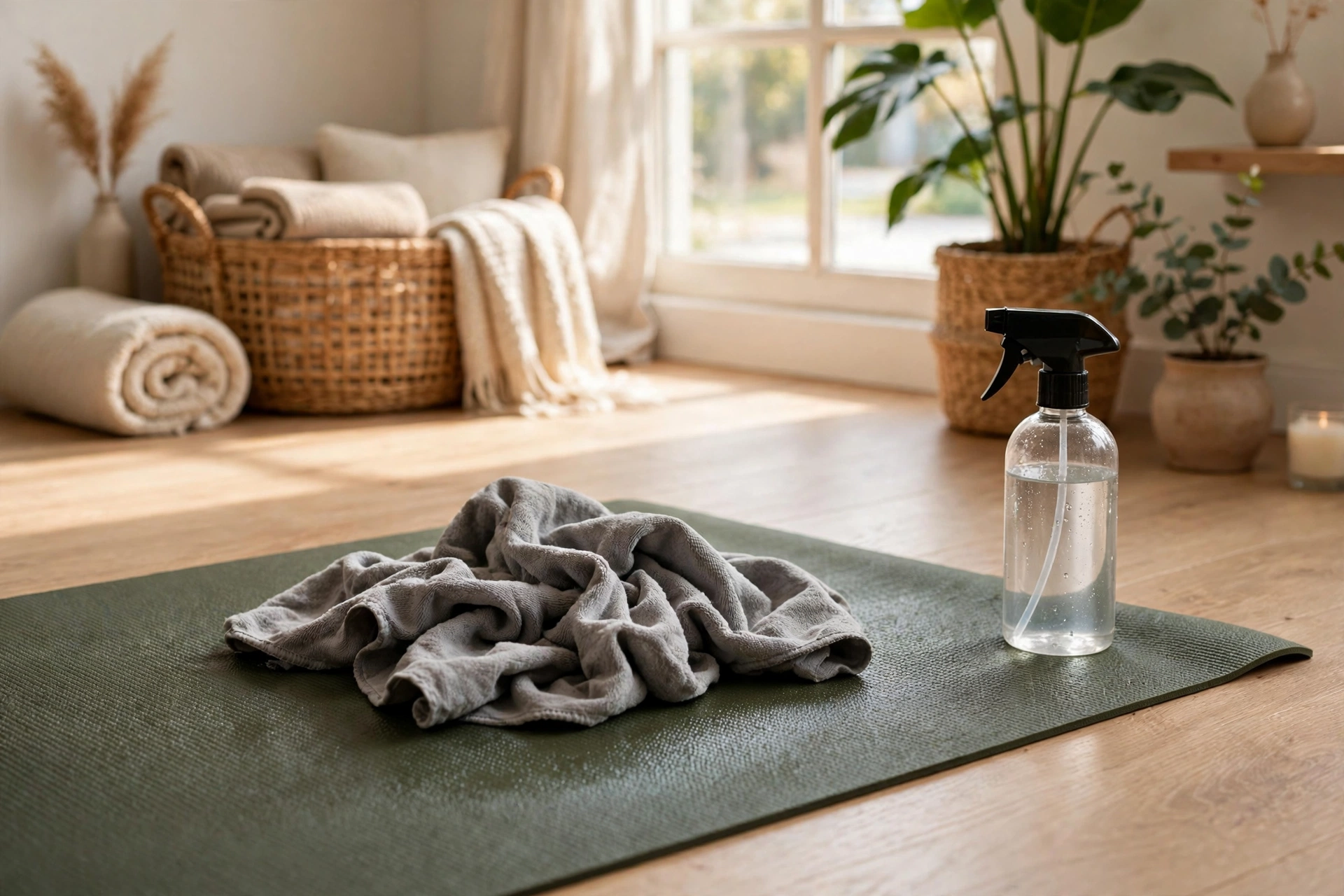
Your yoga mat picks up sweat, skin oils, dust and bacteria every single session — and if you never clean it, it starts to smell, feel slippery and wear out far sooner than it should. The good news is that cleaning a yoga mat takes about five minutes, and you almost certainly have everything you need already.
The one rule that matters most: match the method to the material. A quick wipe that is perfect for a PVC mat can damage a natural rubber mat, and soaking a cork mat will ruin it. Work out what your mat is made of first — it is usually printed on the mat itself or on its packaging — then follow the method below.
How Often Should You Clean a Yoga Mat?
A light wipe after every practice is the habit that makes the biggest difference. Sweat dries into the surface quickly, and once it has dried in, it is much harder to remove — and it is what causes most of the smell.
On top of that, give your mat a proper deep clean once a week if you practise regularly, or once a month if you only use it occasionally. If you practise hot yoga, or you share a mat with someone else, clean it after every single session.
The Quick Clean: After Every Session
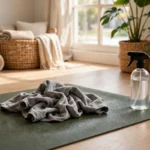
This is the two-minute version. Keep a spray bottle and a cloth next to your mat so it actually happens.
- Mix a spray of warm water with a few drops of mild dish soap. For a natural option, use one part white vinegar to three parts water instead — but skip the vinegar on natural rubber mats, as repeated use can break the rubber down over time.
- Spray the top surface lightly. Do not soak it; a damp surface is enough.
- Wipe it down with a clean, soft cloth or a microfibre towel.
- Flip the mat over and repeat on the underside, which picks up floor dust.
- Leave it flat or hang it over a drying rack until it is completely dry before you roll it up. Rolling a damp mat traps moisture and smell inside.
That is all it takes after a normal session. If your hands slipped during practice, your mat was probably dirty — this wipe restores the grip straight away.
The Deep Clean: Once a Week
When a wipe is no longer enough — the mat smells even when dry, or it looks dull and stained — it is time for a proper wash.
- Fill a bathtub or a large basin with lukewarm water and add a small amount of mild dish soap. Avoid hot water, which can warp some mats.
- Put the mat in and gently scrub both sides with a soft cloth or a soft sponge. Pay attention to the areas where your hands and feet go.
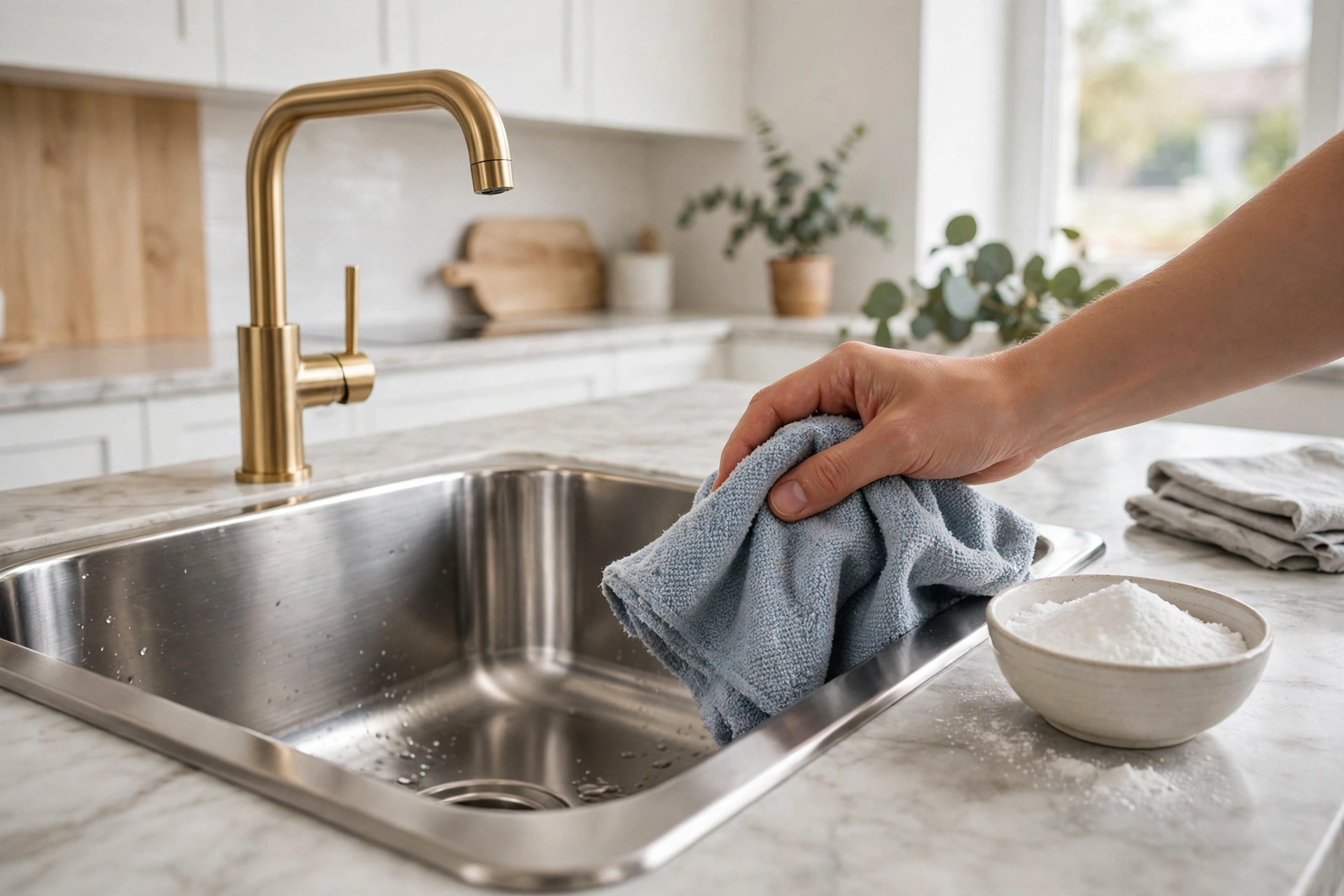
- For stubborn marks, make a paste of baking soda and a little water, rub it in gently, and leave it for a few minutes before rinsing.
- Rinse thoroughly with clean water. Soap left behind makes the mat slippery, which is the opposite of what you want.
- Pat off the excess water with a towel, then hang the mat over a shower rail or drying rack. Let it air-dry completely — this can take several hours, so do it after your last session of the day rather than before a class.
Never put a yoga mat in a washing machine or a tumble dryer. The agitation tears the surface and the heat warps it, and most manufacturers specifically warn against it.
Cleaning by Material
Not all mats are the same, and the wrong cleaner can shorten a good mat’s life.
PVC mats are the hardiest. Soap and water, diluted vinegar, and most mat sprays are all fine. They can handle a full soak in the bath.
TPE (thermoplastic elastomer) mats are a little more delicate. Use mild soap and water only, and avoid vinegar and alcohol-based cleaners, which can dry the surface out and make it crack over time.
Natural rubber mats need the gentlest treatment. Use water with a tiny amount of mild soap, wipe rather than soak, and keep them out of direct sunlight when drying — sun degrades rubber. Never use vinegar or harsh disinfectants on rubber.
Cork mats should never be soaked. Cork is naturally antimicrobial, so a light wipe with water and a drop of soap is usually enough. Let it dry fully, away from direct heat.
If you are not sure what your mat is made of, use the gentlest method — water and a little mild soap, wiped on and wiped off. It is safe for every material.
What Never to Use on a Yoga Mat
A few common cleaners will damage your mat or make it slippery, so keep them away from it:
- Bleach and harsh disinfectants. They break down rubber and TPE, and the residue irritates skin.
- Alcohol-based sprays and hand sanitiser. They dry out the surface and can make it crack.
- Abrasive sponges or brushes. They scratch the grip texture off.
- Essential oils in large amounts. A drop or two of tea tree or lavender oil in a spray is fine for most mats, but undiluted oil can stain and degrade the surface.
- Fabric softener or laundry detergent. Both leave a slippery film that ruins grip.
If you use a shop-bought mat spray, check that it says it is safe for your mat’s material before you use it regularly.
How to Get Rid of Smell
A mat that smells even after washing usually has bacteria trapped in the surface. Baking soda is the simplest fix: sprinkle it generously over the dry mat, leave it for 30 minutes, then brush or vacuum it off and wipe the mat down. For a stubborn smell, repeat the deep clean above and let the mat dry in fresh air — but not in direct sun unless it is PVC.
Prevention is easier than the cure. Wiping the mat after every session stops sweat from drying into it, and storing it unrolled or loosely rolled in a dry place keeps moisture out. A mat bag helps with dust, but only put a fully dry mat in it.
When to Replace Your Mat
Even a well-looked-after mat wears out. Replace it when the surface is flaking or peeling, when it has lost its grip even after a deep clean, when it no longer lies flat, or when the smell survives washing. A good mat that is cleaned regularly should last a few years of normal use — cleaning it properly is what gets you those years.
Frequently Asked Questions
Can I wash my yoga mat in the washing machine?
No. Machine washing tears the surface and warps the shape. Hand-wash it in a bath or basin with lukewarm water and mild soap instead.
How do I clean a yoga mat without vinegar?
Use warm water with a few drops of mild dish soap, wipe it down, and rinse. That is enough for everyday cleaning on every type of mat.
Why does my yoga mat smell?
Sweat and bacteria dry into the surface when a mat is rolled up damp and stored without cleaning. A baking soda treatment followed by a deep clean and full air-drying usually fixes it.
Can I use disinfectant wipes on my yoga mat?
Only if they are made for yoga mats. Ordinary household disinfectant wipes contain bleach or alcohol, which damage rubber and TPE mats and leave a slippery residue.
How long should a yoga mat take to dry?
After a wipe, 15–30 minutes. After a full deep clean, several hours — hang it up and let it air-dry completely before rolling it, or it will smell.