










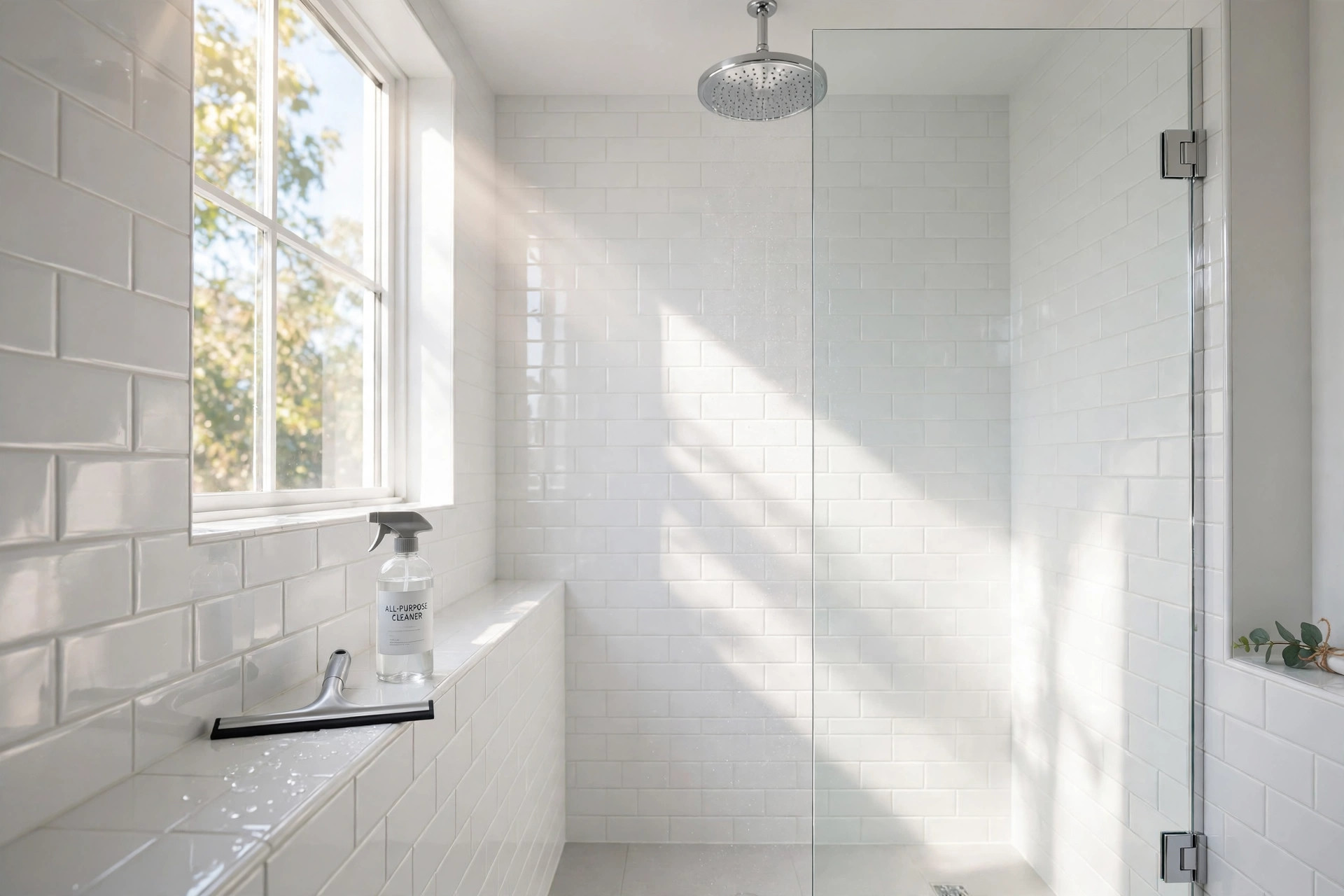
A shower cleans you every day — but who cleans the shower? Soap scum, limescale and black mould build up quietly in the corners, on the grout and across the glass, until one day the whole cubicle looks tired no matter how much you scrub. The good news: you do not need a cupboard full of expensive sprays. With a few basics from the kitchen and a simple order of work, you can get a shower properly clean in about half an hour — and keep it that way with thirty seconds of effort after each use.
What You Will Need
- White vinegar
- Baking soda (bicarbonate of soda)
- Washing-up liquid
- A spray bottle
- An old toothbrush or grout brush
- Microfibre cloths and a sponge
- A squeegee
- Rubber gloves
- Optional: hydrogen peroxide for mouldy sealant
One safety rule before you start: never mix bleach with vinegar or any acidic cleaner. The combination creates harmful fumes. Pick one approach and stick to it, and open a window or run the extractor fan while you work.
Step 1: Clear Everything Out and Rinse
Remove bottles, razors and mats from the shower. Turn on the shower for a few seconds to wet all the surfaces — cleaners spread and work better on a wet surface, and loose hair and grit rinse down the drain instead of smearing around.
Step 2: Clean the Tiles and Grout
For everyday dirt, a spray of equal parts white vinegar and water, left for ten minutes, loosens soap scum so it wipes away with a sponge. For grout, make a paste of baking soda with a little water, spread it along the grout lines and scrub with an old toothbrush. The gentle grit lifts the grey film without damaging the grout. Rinse everything well. One exception: if your tiles are natural stone such as marble or granite, skip the vinegar — acid can dull and etch stone. Use a pH-neutral cleaner instead.
Step 3: Clean the Glass Screen and Remove Limescale
Water marks on a shower screen are limescale, and vinegar is its natural enemy. Spray undiluted white vinegar over the glass, or wipe it on with a cloth, and leave it for fifteen to twenty minutes — the acid needs time to dissolve the mineral deposits. For stubborn white crusts around the edges, soak a cloth in vinegar, lay it against the glass and leave it longer. Then scrub lightly, rinse and dry with a microfibre cloth. Finish with the squeegee for a streak-free shine.
Step 4: Descale the Shower Head
A shower head clogged with limescale sprays in every direction except down. Fill a plastic bag with white vinegar, pull it up over the shower head so the head is submerged, and secure it with an elastic band or tape. Leave it for at least an hour — overnight for heavy build-up. Remove the bag, run the shower hot for a minute to flush it out, and poke any blocked nozzles clear with a pin or an old toothbrush. The spray pattern should be straight and strong again.
Step 5: Tackle Mould on Silicone and Seals
Black spots on the silicone sealant are mould growing into the surface. Make a paste of baking soda and hydrogen peroxide, pack it along the sealant and leave it for an hour before scrubbing and rinsing. If the mould has eaten deep into the silicone and will not shift, the only real fix is to cut out the old sealant and apply fresh — no cleaner can rescue silicone that is stained all the way through.
Step 6: The Drain and a Final Rinse
Pull out any trapped hair from the drain cover (a gloved hand or old tweezers do the job), give the drain a flush with hot water, and rinse the whole cubicle from top to bottom. Dry the glass and chrome with a microfibre cloth — drying, not rinsing, is what leaves the sparkle.
A Weekly Routine That Stops the Grime
The real secret of a clean shower is not the deep clean; it is the thirty seconds after every shower. Run the squeegee over the glass and tiles each time you finish, and limescale barely gets a chance to form. Once a week, spray the cubicle with your vinegar solution (or a bathroom cleaner), leave it while you brush your teeth, then rinse. Do that, and the monthly deep clean becomes a quick tidy instead of a battle.
Frequently Asked Questions
How often should you clean a shower?
Give the shower a light clean once a week and a deep clean — including the shower head and sealant — about once a month. A quick squeegee after each use keeps limescale and soap scum from building up in between.
What is the best homemade shower cleaner?
A spray of equal parts white vinegar and water handles most soap scum and limescale. A baking soda paste is best for grout and stubborn marks. Avoid vinegar on natural stone tiles such as marble.
How do you remove limescale from a shower screen?
Spray or wipe undiluted white vinegar onto the glass, leave it for fifteen to twenty minutes, scrub lightly, rinse and dry with a microfibre cloth. Repeat with a vinegar-soaked cloth laid on the glass for heavy deposits.
Can vinegar damage a shower?
Vinegar is safe on ceramic and porcelain tiles, glass and chrome. Do not use it on natural stone (marble, granite, travertine) or on damaged grout, as the acid can etch the surface. Never mix vinegar with bleach.