







A stainless steel sink works harder than almost anything else in the kitchen, and it shows. Water spots, tea and coffee stains, limescale around the taps and a dull, streaky finish can make even a clean kitchen look tired. The good news is that stainless steel is easy to restore — you do not need a cupboard full of specialist products, just the right order of steps and one simple rule: always work with the grain, never against it.
What You Need
Everything on this list is probably already in your kitchen:
- Mild dish soap
- Baking soda (bicarbonate of soda)
- White vinegar in a spray bottle
- Two soft microfibre cloths
- A soft sponge or an old soft toothbrush for around the taps
- A little olive oil or baby oil for the final polish (optional)
Avoid steel wool, scouring pads and powdered cleaners with bleach. They scratch the surface, and scratches are what make a stainless steel sink look dull and hold on to stains in the first place.
Step 1: The Daily Clean
Most sink grime is just food residue, grease and soap scum, and a daily wash stops it building up into stains.
- Empty the sink completely and rinse away loose debris.
- Wash the whole basin, taps and draining board with hot water and a few drops of dish soap on a soft sponge.
- Rinse with clean hot water.
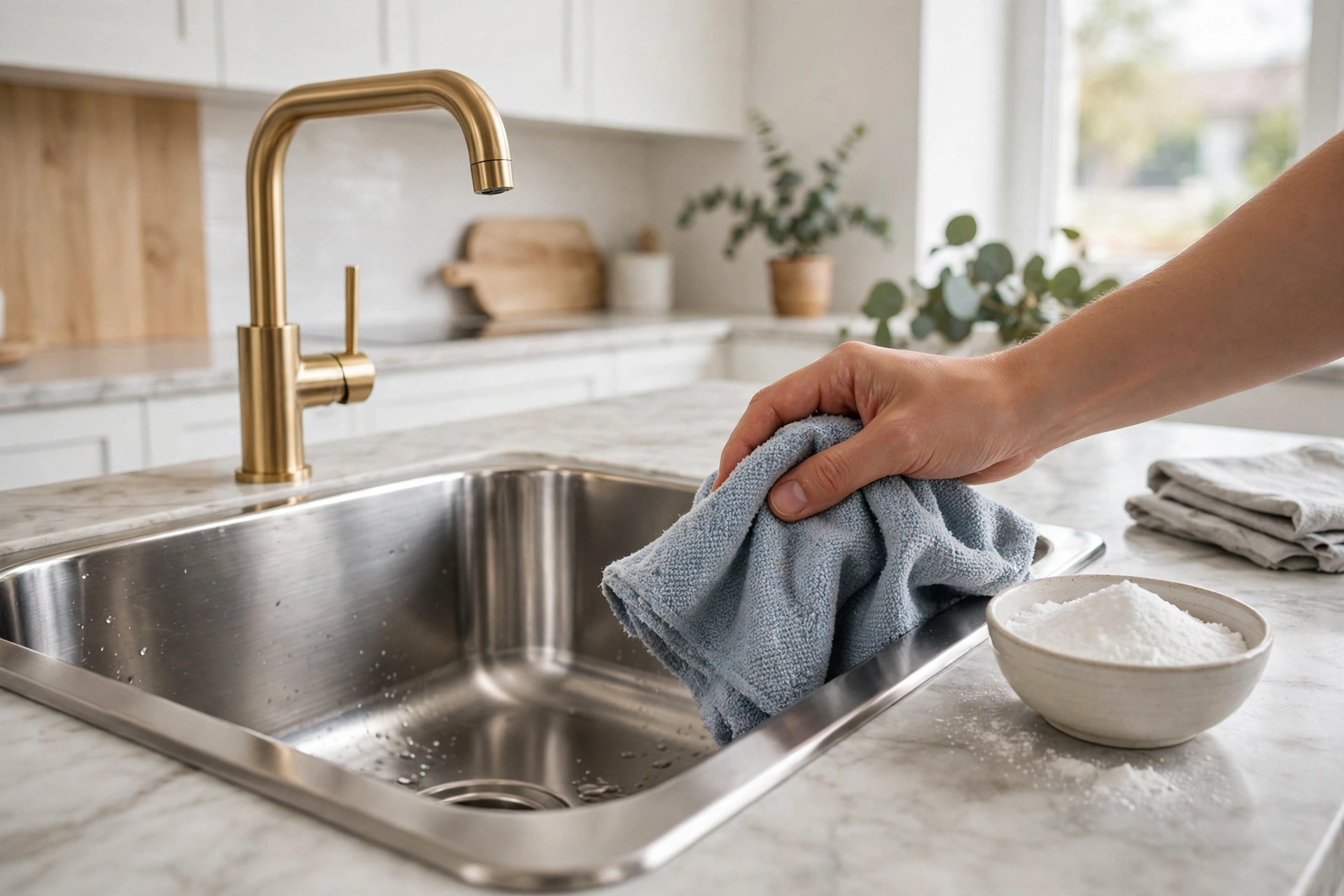
- Dry the sink with a clean microfibre cloth.
That last step — drying — is the one most people skip, and it is the one that matters most for appearance. Water left to air-dry is what leaves water spots and hard water marks on stainless steel, especially in hard-water areas.
Step 2: Remove Stains and Water Spots with Baking Soda
For a sink that already looks stained, cloudy or marked, baking soda is the best stainless steel sink cleaner you own. It is mildly abrasive — enough to lift stains without scratching — and it neutralises odours at the same time.
- Wet the whole sink so the surface is damp.
- Sprinkle a generous layer of baking soda over the basin, concentrating on stained areas.
- Using a damp soft cloth or sponge, rub in the direction of the grain. Stainless steel has fine lines running through it; rubbing along them cleans without marking the finish, while scrubbing in circles or against the grain can leave visible scratches.
- For stubborn stains around the drain or under the taps, make a paste of baking soda and a little water, spread it on, and leave it for 15–20 minutes before rubbing.
- Spray white vinegar over the baking soda. It will fizz — that reaction helps lift limescale and hard water deposits. Wipe again, still following the grain.
- Rinse thoroughly with hot water and dry with a microfibre cloth.
Tea and coffee stains, rust-coloured marks from standing tins, and grey limescale film all respond well to this treatment. Repeat it weekly and most sinks stay clear of stains altogether.
Step 3: Clean Around the Taps and Drain
The areas a cloth cannot reach are where grime and limescale collect. Dip an old soft toothbrush in the baking soda paste and work around the base of the taps, the overflow slot and the drain rim. For heavy limescale on the tap base, soak a cloth in white vinegar, wrap it around the fitting for 20 minutes, then wipe away the softened deposits.
If the drain smells, pour half a cup of baking soda down it, follow with a cup of white vinegar, leave it to fizz for ten minutes, then flush with a kettle of hot water.
Step 4: Polish the Sink for a Restored Shine
Once the sink is clean and completely dry, you can bring back the showroom shine in under a minute. Put two or three drops of olive oil (or baby oil) on a clean, dry microfibre cloth and buff the whole basin, again moving with the grain. The thin oil film fills in micro-scratches, deepens the shine and helps water bead and run off instead of spotting — so the sink stays cleaner for longer. Use very little oil; too much leaves a film that attracts dust.
What Not to Use on a Stainless Steel Sink
- Steel wool and scouring pads — they scratch the finish permanently.
- Bleach and chloride-based cleaners — they can pit and discolour stainless steel if left on the surface.
- Undiluted vinegar left standing — fine as a quick spray during cleaning, but soaking the steel in acid for hours can damage the protective layer.
- Leaving wet sponges, cloths or tins sitting in the sink — trapped moisture causes rust-coloured marks, even on stainless steel.
How to Keep the Sink Looking Good
Rinse and dry the sink after heavy use, wipe up standing water around the taps, and give it the baking soda treatment once a week. In hard-water areas, a quick dry after the last wash of the evening prevents most water spots from forming at all. Treated this way, a stainless steel sink keeps its shine for years.
Frequently Asked Questions
What is the best cleaner for a stainless steel sink?
Baking soda with a little water is the most effective everyday cleaner: it lifts stains and water spots without scratching. For routine washing, hot water and mild dish soap are enough.
How do I remove water spots from a stainless steel sink?
Rub baking soda paste along the grain, spray with white vinegar, wipe, rinse and dry. Drying the sink after use stops the spots coming back.
Can vinegar damage a stainless steel sink?
A quick spray during cleaning is safe and removes limescale. What damages the finish is leaving acid sitting on the steel for a long time, so always rinse and dry afterwards.
Why does my stainless steel sink look dull?
Usually a film of limescale, soap scum and fine scratches from scouring pads. A baking soda clean followed by a light oil polish restores the shine.
How do I stop my sink getting rust marks?
Do not leave steel tins, wet scouring pads or cast-iron pans sitting in the basin. The marks come from those items rusting against the surface, not from the sink itself.