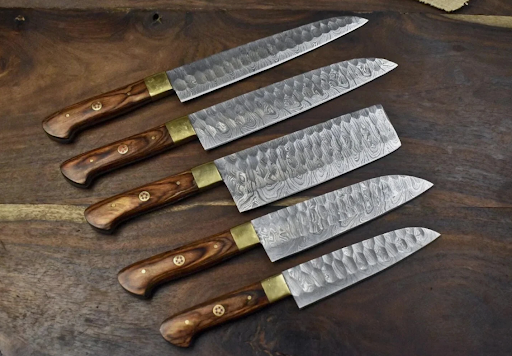
A well-equipped kitchen starts with the right tools, and a quality chef knife set can make everyday food preparation more convenient, comfortable, and efficient. Whether you enjoy cooking at home or prepare meals professionally, choosing suitable kitchen knives helps you chop vegetables, slice meat, prepare fruit, and handle a variety of ingredients with greater control.
However, selecting a knife set involves more than comparing prices or counting the number of knives in a package. Blade material, handle comfort, balance, versatility, and maintenance requirements all influence the usefulness of a set. Understanding these factors can help you make a more informed decision.
What Is a Chef Knife Set?
A chef knife set typically includes several kitchen knives designed for different food preparation tasks. Some sets contain only a few essential blades, while others include additional knives, kitchen shears, sharpening tools, and a storage block.
The best choice depends on your cooking habits, available kitchen space, and budget. A smaller set with well-made essential knives may be more useful than a large collection containing tools you rarely need.
Before purchasing a set, consider which knives you use most frequently and whether the included pieces offer practical value.
Essential Knives Every Kitchen Should Have
Different knives serve different purposes. Understanding their uses makes it easier to choose a suitable collection.
1. Chef’s Knife
The chef’s knife is often the most versatile tool in a kitchen. Its broad blade is suitable for chopping vegetables, slicing boneless meat, mincing herbs, and preparing many everyday ingredients.
Choose a blade length and handle shape that feel comfortable in your hand. Good balance and comfortable handling are important when preparing ingredients for extended periods.
2. Paring Knife
A paring knife is designed for smaller, more precise tasks. It is useful for peeling fruit, trimming vegetables, removing blemishes, and completing detailed preparation work.
Its compact size provides control when a larger chef’s knife would be inconvenient.
3. Bread Knife
A serrated bread knife is designed to cut through crusty bread without excessively crushing the softer interior. Its toothed edge can also be useful for slicing certain delicate foods, including ripe tomatoes.
4. Utility Knife
A utility knife fills the gap between a chef’s knife and a paring knife. Depending on its design, it can handle smaller slicing tasks, sandwiches, fruit, and other everyday ingredients.
5. Santoku or Carving Knife
A santoku knife is a versatile alternative to a traditional chef’s knife, particularly for cooks who prefer its blade shape and cutting style. A carving knife, by comparison, is designed for making neat slices of cooked meat.
You do not necessarily need every type. Choose additional knives according to the meals you prepare most often.
How to Choose the Right Blade Material
Blade material influences a knife’s cutting performance, resistance to corrosion, edge retention, and maintenance requirements.
Stainless steel is popular because it generally offers good corrosion resistance and is relatively straightforward to maintain. Carbon steel can take a keen edge but typically requires more attention to prevent rust and discoloration.
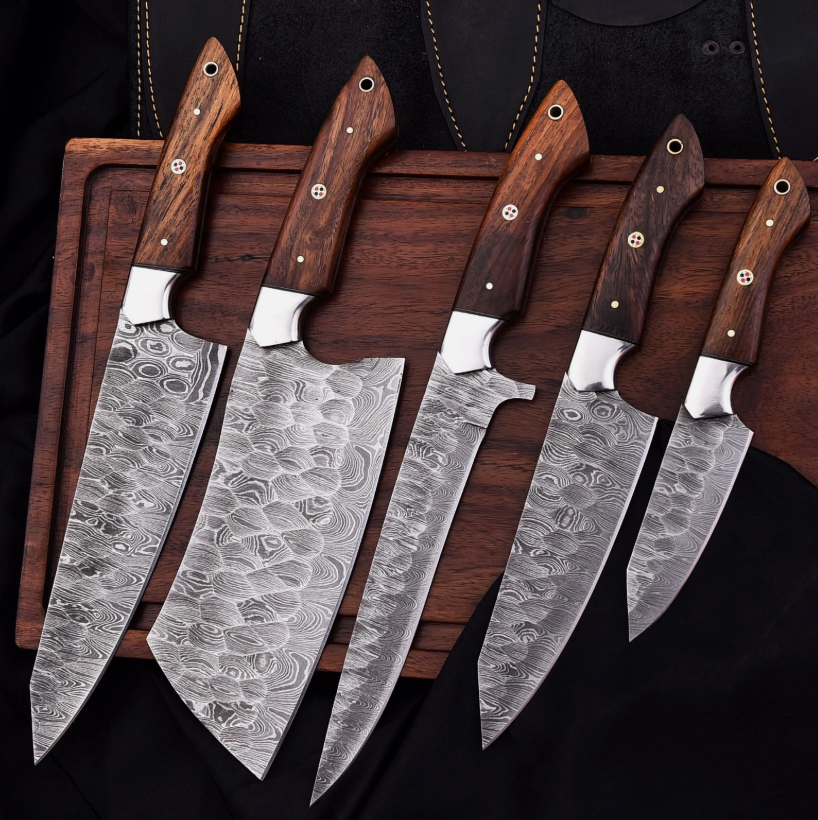
Damascus-style knives are also popular among cooking enthusiasts because of their distinctive layered appearance. Depending on how a blade is manufactured, its visible patterns may result from multiple layers of steel. However, the pattern alone does not determine cutting performance.
When comparing knives, look for clear information about the steel composition, heat treatment, blade construction, and recommended care. These details are more useful indicators than decorative finishes or marketing claims alone.
Why Handle Design and Balance Matter
A knife should feel comfortable and controllable during ordinary kitchen tasks. Handle shape, material, weight distribution, and overall construction all affect the experience.
Some knives feature wooden handles that provide a traditional appearance, while others use synthetic materials designed for durability and easy cleaning. The right choice depends on personal preference and the manufacturer’s care recommendations.
Balance is equally important. A knife that feels excessively heavy at the blade or handle may be less comfortable for some users. Whenever possible, consider how the knife feels in your hand rather than judging it by appearance alone.
Should You Buy a Complete Knife Set or Individual Knives?
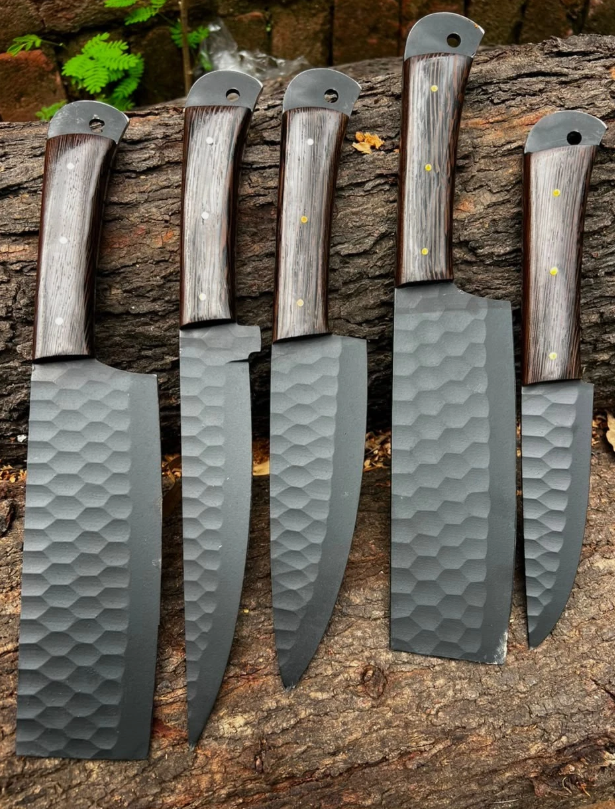
A complete knife set offers convenience because several matching knives can be purchased together. Sets may also include organized storage, helping keep blades protected and accessible.
Buying individual knives can make more sense if you already own essential kitchen tools or prefer particular blade styles. This approach allows you to invest in the specific knives you use most often rather than paying for unnecessary additions.
For beginners, a chef’s knife, paring knife, and serrated bread knife provide a practical starting point. Additional pieces can be purchased as your cooking skills and needs develop.
Knife Care and Maintenance
Proper maintenance helps preserve a knife’s cutting performance and condition.
Clean after use: Wash kitchen knives according to the manufacturer’s instructions. Hand washing is often preferable because dishwashers can expose blades and handles to harsh detergents, heat, and repeated impacts.
Dry thoroughly: Wipe knives dry after washing to reduce the risk of corrosion, water spots, and handle damage.
Maintain the edge: Regular honing can help maintain edge alignment, while sharpening restores a worn cutting edge. Choose a method appropriate for the knife’s steel and edge geometry.
Use suitable cutting boards: Wood and appropriate plastic boards are generally preferable to glass, stone, or ceramic surfaces, which can damage cutting edges.
Store safely: Use a knife block, protective blade guard, suitable drawer insert, or secure magnetic holder. Avoid leaving sharp knives loose in drawers.
Consistent care can help maintain the usefulness of your knives for years.
Finding Quality Knives for Your Kitchen
When exploring kitchen knives, compare more than the number of pieces included in a set. Consider the quality of the essential blades, the suitability of their materials, the comfort of their handles, and the maintenance they require.
For shoppers interested in exploring different knife designs and craftsmanship, Blade vista offers a place to discover knife styles and learn more about available options.
Take time to compare product specifications, read care instructions, and choose knives that match your cooking requirements. A thoughtfully selected set can make everyday food preparation more organized and enjoyable.
Final Thoughts
Choosing the right chef knife set is about finding a practical balance between quality, comfort, versatility, and value. A few dependable knives can cover most everyday kitchen tasks without creating unnecessary clutter.
By understanding the purpose of each blade, comparing materials carefully, and maintaining your knives properly, you can build a collection that supports your cooking routine and remains useful over time.