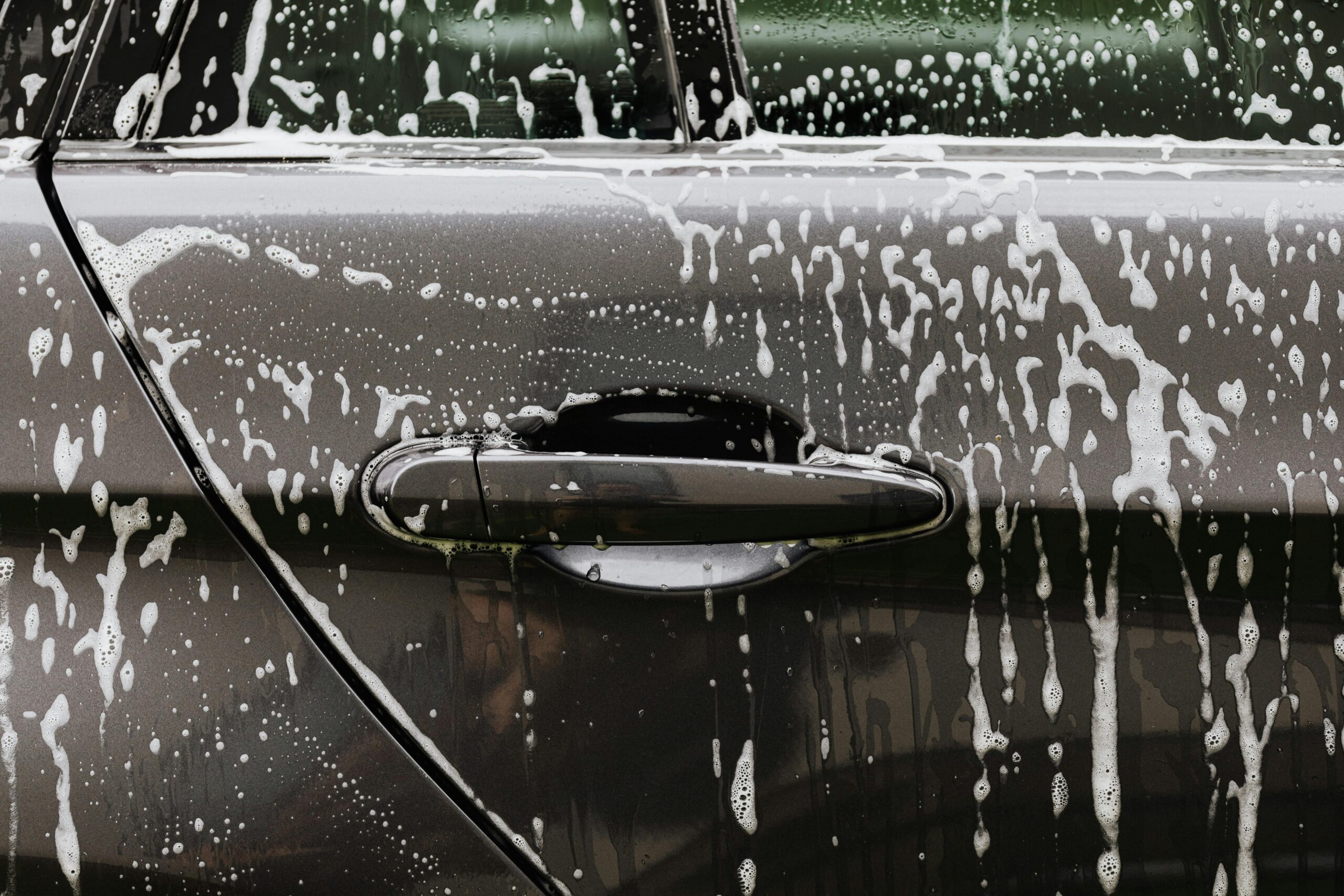
There is a specific satisfaction that comes with driving a freshly washed car. The sun hits the panels, the glass gleams, and for a moment, the vehicle looks brand new again. Most car owners believe that a weekly trip through the automatic car wash or a Sunday morning bucket-and-sponge routine is enough to keep their investment safe.
The Hidden Dangers of Environmental Contaminants
The environment is hostile to automotive paint. Every time you drive, your vehicle is bombarded by microscopic contaminants that water and soap simply cannot remove. These elements bond to the surface of your paint, creating a rough texture and slowly eating away at the protective clear coat.
Chemical Fallout and Acidic Threats
Bird droppings are among the most common and destructive contaminants. They are highly acidic (ranging from pH 3 to 4.5). When left on a car’s surface, especially under the heat of the sun, the acid burns into the clear coat, leaving permanent etching that washing cannot fix.
Similarly, tree sap is not just sticky; it is resinous and hardens like glue. Attempting to scrub it off during a regular wash often results in pulling paint off along with the sap.
Industrial Fallout and Road Salt
If you live near industrial areas or railways, your car is likely covered in “rail dust”—tiny metal particles that embed themselves into the paint. Over time, these particles rust, creating small orange specks on your finish.
For those in colder climates, road salt is a notorious vehicle killer. Salt accelerates the oxidation process, leading to rust on the undercarriage and lower panels. A standard wash rarely reaches the nooks and crannies where salt accumulates, allowing corrosion to spread unnoticed.
How Washing Can Cause Micro-Scratches
Ideally, washing your car should improve its condition. However, improper techniques often do more harm than good. If you have ever looked at your car under direct sunlight and noticed a web of fine, circular scratches, you are looking at “swirl marks.”
These are usually self-inflicted wounds caused by friction.
The Automatic Car Wash Problem
Drive-through car washes are convenient, but the stiff bristles used in older machines act like sandpaper on your paint. Even “touchless” washes use high-pressure water jets that can drive dirt deeper into the paint surface rather than lifting it off. Furthermore, the harsh chemicals used to strip dirt quickly can dry out rubber seals and trim.
The Dirty Sponge Effect
Hand washing isn’t immune to risks, either. Using a traditional sponge traps dirt particles in the pores. As you drag the sponge across the paint, you are essentially dragging sharp grit across the clear coat. This abrasion creates the swirl marks that rob your paint of its depth and shine.
The Importance of Professional Detailing
This is where professional detailing differs from a standard car wash. Detailing is not about cleaning; it is about restoration and protection. A professional detailer uses specialized tools and chemistry to address the issues that a bucket of soapy water leaves behind.
Decontamination
Detailers use a clay bar treatment to physically pull embedded contaminants—like the rail dust and sap mentioned earlier—out of the clear coat. This leaves the paint feeling glass-smooth, a texture you can never achieve with washing alone.
Paint Correction
To fix the micro-scratches and swirl marks, detailers perform paint correction. This involves using machine polishers and abrasive compounds to remove a microscopic layer of the clear coat. By leveling the surface, they eliminate the scratches and restore the paint’s optical clarity, making the color pop and the reflection mirror-like.
Essential Paint Protection Options
Once the paint is clean and corrected, it needs armor. Leaving bare paint exposed to the elements guarantees that the damage will return. There are several tiers of protection available, ranging from temporary to permanent.
Carnauba Wax
The traditional choice. Wax provides a warm, deep glow to the paint and offers a basic layer of protection against water and dirt. However, it is the least durable option, typically lasting only 4 to 6 weeks before heat and washing strip it away.
Paint Sealants
Sealants are synthetic polymers designed to bond to the paint surface. They don’t offer the same “warm” look as wax, but they are significantly more durable, often lasting 4 to 6 months. They provide better resistance against high temperatures and UV rays.
Ceramic Coatings
Ceramic coatings represent a major leap in technology. This liquid polymer chemically bonds with the vehicle’s factory paint, creating a layer of protection that can last for years. It is hydrophobic, meaning water beads up and rolls off, taking dirt with it. This makes the car much easier to clean and provides excellent protection against chemical etching from bird droppings.
Paint Protection Film (PPF)
For the highest level of defense, many owners turn to car paint protection film. Unlike liquid coatings, PPF is a physical barrier—a thick, transparent urethane film applied to high-impact areas of the car (like the bumper, hood, and mirrors).
While ceramic coatings protect against chemicals, car paint protection film protects against physical impact. It is the only solution that effectively stops rock chips, deep scratches, and minor abrasions from reaching the paint. Many modern films are also “self-healing,” meaning minor scratches on the film disappear when exposed to heat.
Maintaining Your Car’s Appearance
You don’t need to visit a professional detailer every week to keep your car looking great. Between professional sessions, you can maintain your vehicle’s appearance by adopting better habits at home.
- Use the Two-Bucket Method: Fill one bucket with soapy water and a second bucket with plain rinse water. After washing a panel, rinse your mitt in plain water to remove dirt before dipping it back into the soap. This ensures you are always washing with a clean mitt.
- Ditch the Sponge: Switch to high-quality microfiber wash mitts. The fibers lift dirt away from the paint rather than dragging it across the surface.
- Dry Properly: Never let your car air dry, as this causes water spots (mineral deposits). Use a large, clean microfiber drying towel or a forced-air blower to dry the surface safely.
- Use pH-Neutral Soaps: Avoid dish soap, which is too harsh and can strip away wax or sealants. Use a dedicated car shampoo that is pH-balanced.
Conclusion
A car is often the second largest purchase a person makes, yet many treat the exterior maintenance as an afterthought. Regular washing is necessary for hygiene, but it is insufficient for preservation. By using the above tips, you can ensure that your car’s exterior stays in pristine condition for years to come. Remember to always use quality products and proper techniques when maintaining your car’s paintwork.