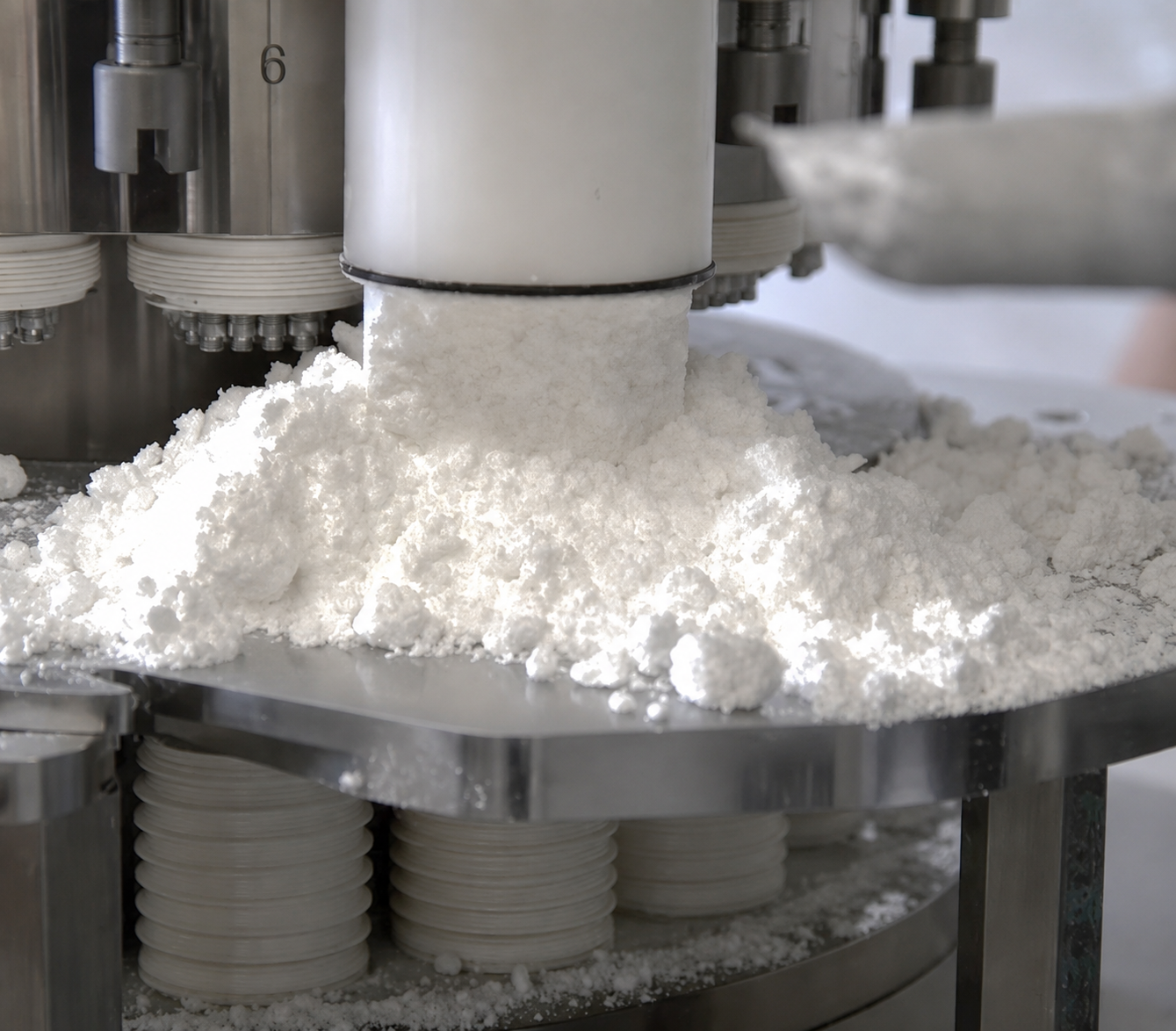
When operating a tablet press, powder flow problems are sometimes mistaken for mechanical issues. Erratic tablet weight, unstable compression force or an accumulation of fines around the feeder may indicate inconsistent material flow.
Operators should monitor changes in tablet weight, compression force and feeder performance. Changes in feeder load or current draw also provide useful indications of how the material behaves during production. If these parameters fluctuate, the granulation and feeding process should be investigated alongside the machine settings.
How to improve powder flow
Optimize the feed frame
Feed frame design, paddle geometry and paddle speed influence how consistently material reaches the dies. The settings should support stable powder movement without excessive agitation, which might contribute to segregation or overworking of the material.
Review the granulation process
Particle size distribution, particle shape, moisture and fines content all affect flowability. If flow is limiting production performance, review the granulation process and identify whether changes to particle size or granule properties are required.
Control segregation
Segregation can occur during transport, transfer or storage. Review material transfer points and minimize unnecessary movement or vibration. A controlled material path helps maintain a more consistent composition before the powder reaches the tablet press.
Optimize press speed
Press speed affects the available time for die filling. If the material does not fill the dies consistently at a given speed, reducing the speed and evaluating the resulting fill behavior is one possible process adjustment. The optimum setting depends on the formulation, feeder design and press configuration.
Review hopper and feeding geometry
Hopper and feeder geometry should match the flow characteristics of the formulation. Designs that support controlled material discharge help reduce bridging and inconsistent feeding. Vibration should be applied carefully because excessive vibration might contribute to segregation.
Evaluate excipients carefully
Glidants and other flow aids influence powder behavior, but their use should be based on formulation requirements and process data. Excessive or inappropriate use might affect other properties, including tablet strength, lubrication and dissolution.
Benefits of stable powder flow
Addressing powder flow at its source helps stabilize the tablet manufacturing process. Consistent die filling supports tighter tablet weight control and more stable compression conditions. It also helps reduce process interruptions, product waste and unnecessary adjustments to the tablet press.
For high-volume production, stable material flow is particularly important. A well-matched combination of formulation, feeding system and tablet press supports consistent output while maintaining the required product quality.
Conclusion
Reliable powder flow results from the interaction between material properties, process conditions and tablet press design. By monitoring die filling, feeder performance and compression parameters, manufacturers can identify flow-related issues early.
Optimizing granulation, material transfer, feeding conditions and press speed provides a structured approach to improving tablet production. The right combination of formulation and machine settings supports consistent tablet quality and efficient production.
READ ALSO: Putney Electrician: How to Keep Your Home Safe, Efficient and Future-Ready




One thought on “How to improve Powder Flow for Better Tablet Press Results”