The birth of a strong and physically healthy baby is the natural result of a thoughtful approach to family planning and timely, highly accurate medical diagnostics. At specialized reproductive medicine centers, preconception care and comprehensive pre-pregnancy screenings are tailored to account for the most subtle anatomical and hormonal characteristics of the female body. This personalized approach makes it possible to minimize potential perinatal risks in advance, correct hidden deficiencies in a timely manner, significantly increase the chances of a natural pregnancy, and ensure its normal progression all the way through to a successful delivery.
Why Is a Medical Examination Necessary During the Pregnancy Planning Stage?
Comprehensive preconception screening addresses a key challenge in modern reproductive medicine by identifying hidden pathological processes and risk factors even before the fusion of gametes. Based on the data obtained, doctors develop a personalized plan for the expectant mother to prepare for conception and carry the pregnancy to term.
Detailed diagnostics are of particular clinical importance for the following categories of patients:
- women with chronic somatic conditions affecting the cardiovascular system, kidneys, gastrointestinal tract, or endocrine organs;
- patients who have had acute or chronic urogenital infections and inflammatory processes;
- women who have had difficulty conceiving naturally after six months to a year of regular sexual activity, as well as those with a history of missed abortions or spontaneous abortions.
A comprehensive women’s health examination and screening for a range of infectious agents prior to pregnancy are mandatory regulatory steps in preparation for assisted reproductive technology (ART) programs. A properly organized comprehensive pre-IVF evaluation enables doctors to accurately assess a couple’s reproductive potential and select the most effective method:
- Conventional IVF (in vitro fertilization). A method in which the retrieval and fertilization of mature oocytes with sperm take place outside the woman’s body in an embryology laboratory, after which a viable embryo is carefully transferred to the uterine cavity.
- IVF program with donor eggs. The optimal clinical solution for patients with depleted ovarian reserve, genetic abnormalities, or a complete absence of their own healthy gametes.
- IVF Program with Dual Donation. A comprehensive reproductive protocol used in the most complex situations, where both donor oocytes and high-quality donor semen are required to achieve pregnancy.
Key Stages and Areas of Preconception Screening
Initial Consultation and Diagnostic Testing
- Consultation with a general practitioner. The general practitioner collects a detailed family and medical history, assesses the woman’s overall physical condition and blood pressure, rules out decompensated chronic diseases, and adjusts any long-term medication regimens to ensure their safety during pregnancy.
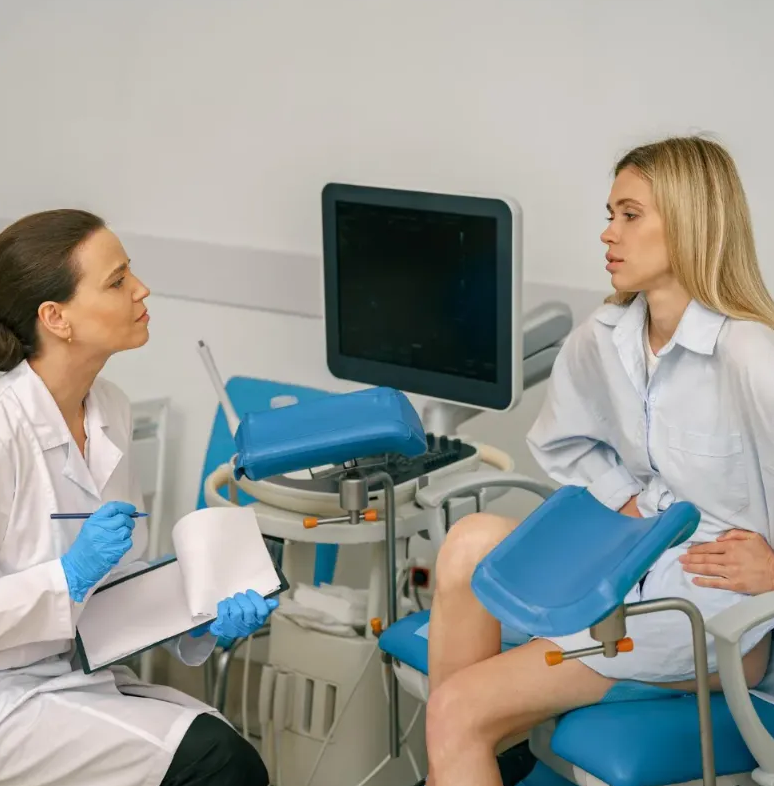
- Appointment with an obstetrician-gynecologist. The specialist performs a pelvic exam, collects microbiological swabs to assess vaginal microflora, and arranges for a cytological examination of a cervical scraping to rule out dysplasia and cancer.
- Pelvic ultrasound. An ultrasound examination allows for visualization of the endometrium, the muscular layer of the uterus, and the follicular apparatus of the ovaries. The examination detects polyps, fibroids, endometriosis lesions, and cysts, and also assesses the prospective mother’s ovarian reserve.
Laboratory Diagnostics
- General clinical blood and urine tests. These tests provide a baseline assessment of blood cell composition, hemoglobin levels, white blood cell count, and platelet count, which helps rule out inflammatory reactions and latent iron-deficiency anemia.
- Fertility hormone profile. Laboratory assessment of levels of estradiol, progesterone, prolactin, thyroid-stimulating hormone (TSH), luteinizing hormone (LH), follicle-stimulating hormone (FSH), free thyroxine (T4), and anti-Müllerian hormone (AMH) on specific days of the menstrual cycle.
- Screening for sexually transmitted infections. Highly accurate PCR testing to detect chlamydia, ureaplasma, mycoplasma, high-risk human papillomavirus (HPV), and other pathogenic microorganisms.
- TORCH serology panel. Detection of specific IgM and IgG antibodies to toxoplasmosis, rubella, cytomegalovirus, and herpes simplex virus, allowing for the timely detection of primary infection or confirmation of protective immunity.
- Assessment of vitamin and mineral status. Testing of levels of key nutrients, particularly folic acid (vitamin B9) and vitamin D (25-OH), which directly affect the formation of the fetal neural tube, proper placental development, and the mother’s overall well-being.
Specialized and Advanced Tests
- Genetic tests. Analysis of common recessive mutations that can cause severe congenital defects and developmental abnormalities in the child.
- Karyotyping of the couple. Cytogenetic analysis of each partner’s chromosome set to rule out hidden structural chromosomal abnormalities.
- Coagulation profile. A comprehensive assessment of blood coagulation (fibrinogen, INR, APTT, D-dimer), necessary to prevent thrombophilic complications and impaired implantation of the fertilized egg.
- Consultations with specialists. Examinations by an endocrinologist, hematologist, cardiologist, or geneticist, if indicated, to develop a unified approach to pregnancy management.
Preparation for Laboratory and Diagnostic Tests
To obtain the most accurate results, it is important to follow medical preparation guidelines:
- Blood samples for clinical parameters, biochemistry, and hormones are drawn in the morning on an empty stomach after a fasting period of 8 to 12 hours. Hormone levels—FSH, LH, estradiol, and prolactin—are typically tested on days 2–5 of the menstrual cycle, while progesterone is measured during the luteal phase, approximately on days 21–23 of a 28-day cycle.
- A pelvic ultrasound is best performed on days 5–7 of the menstrual cycle, when the endometrial thickness is at its thinnest and even the slightest organic changes can be clearly visualized.
- Swabs for bacterial flora, infections, and cytology are taken outside of menstruation; sexual intercourse and the use of any vaginal medications should be avoided for two days prior to the doctor’s visit.
Where to Get Preconception Testing
Our reproductive medicine clinic conducts a full range of preconception tests in accordance with international medical standards.
Consultations are conducted by specialized physicians: reproductive specialists, recognized experts in assisted reproductive technologies, obstetricians-gynecologists, endocrinologists, and experienced ultrasound diagnosticians. The clinic is equipped with its own certified laboratory and expert-grade ultrasound equipment.
You can schedule an examination and ask any questions using the contact form in the “NatuVitro” section. Entrust the health of your future family to experienced specialists and begin your pregnancy with peace of mind and full awareness.
Frequently Asked Questions
How many months before conception should you undergo testing?
Doctors recommend coming in for an examination 3 to 6 months before the expected conception. This allows enough time to complete blood tests, undergo an ultrasound, treat any detected infections, and ensure your body is adequately supplied with essential micronutrients.
Does the future father need to be examined?
A man’s health accounts for exactly half of the quality of his sperm. It is important for the partner to visit a urologist or andrologist, get tested for hidden urogenital infections, undergo a comprehensive semen analysis with Kruger morphology assessment and a MAR test, and determine his blood type and Rh factor to rule out an immunological conflict.
How long are the results of these tests valid?
The validity periods vary:
- general blood and urine tests, as well as a coagulogram, remain valid for 14 to 30 days;
- smears for bacterial flora and oncocytology remain valid for 1 to 6 months;
- the hospital-administered panel for HIV, hepatitis, and syphilis remains valid for up to 3 months;
- karyotyping and tests for genetic mutations are performed only once in a lifetime, since a person’s individual chromosomal code is unchanging.
What does a positive IgG and negative IgM result in the TORCH panel indicate?
This result is considered the most favorable for the expectant mother. It indicates that the body has already encountered the pathogen and developed strong protective immunity, so the risk of intrauterine infection of the fetus is minimal. If, however, IgG antibodies to dangerous infections are absent, preliminary vaccination may be required.
Why is a genetic test necessary if there is no history of hereditary diseases in the family?
Virtually everyone is an asymptomatic carrier of several genetic variations. If both partners happen to be carriers of the same recessive mutation, the risk of having an affected baby is 25%. Karyotype analysis and genetic screening help identify these risks in advance and, if necessary, allow for the use of assisted reproductive techniques involving preimplantation genetic testing of the embryo.
Why are folic acid and vitamin D prescribed several months before conception?
The formation of the nervous system and the closure of the neural tube in the embryo occur during the first four weeks of development, when a woman often does not yet know she is pregnant. Taking folate and vitamin D three months before pregnancy enriches the expectant mother’s tissues, dramatically reducing the likelihood of severe central nervous system defects and placental dysfunction.