







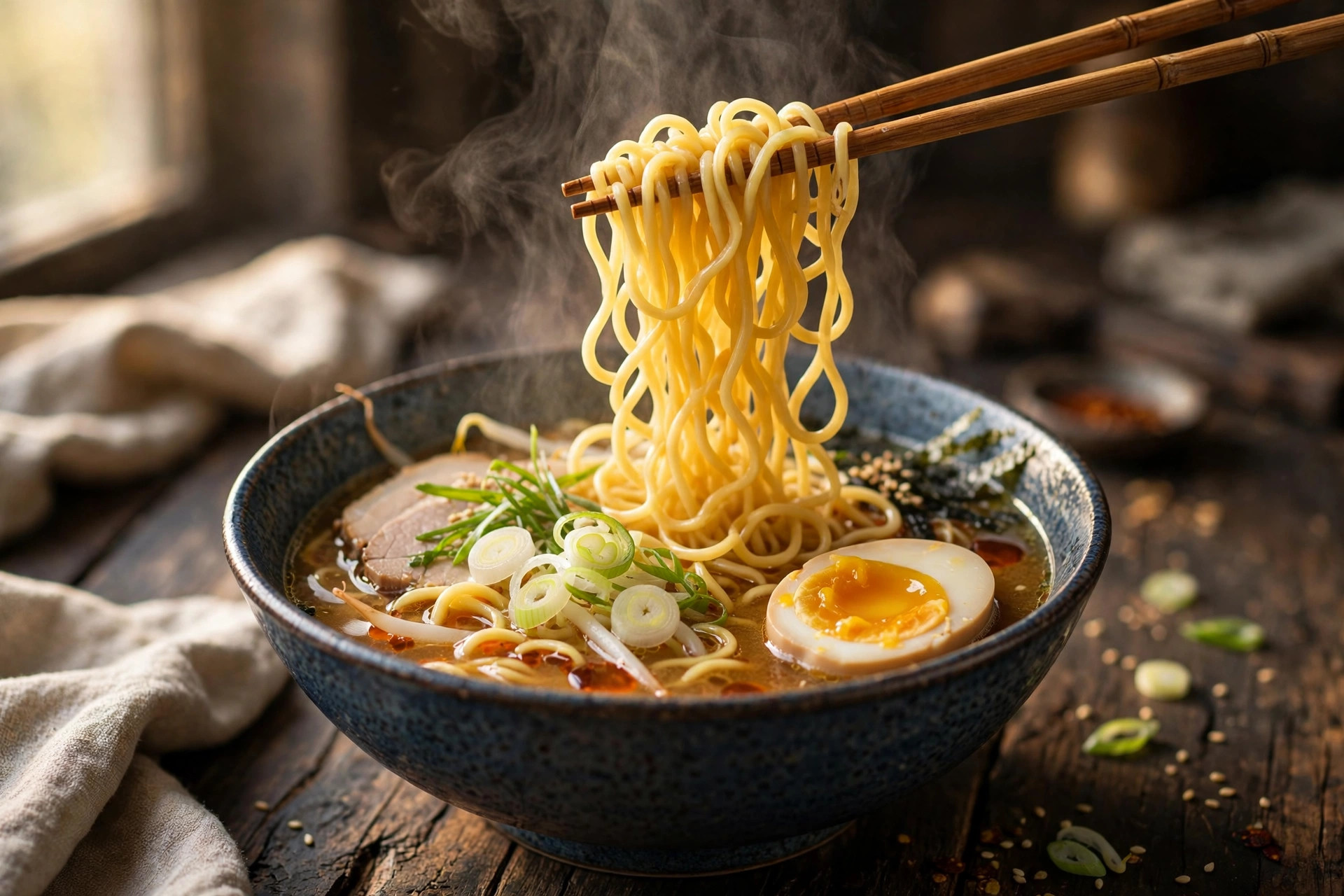
The broth gets all the glory, but anyone who has made ramen at home knows the truth: the noodles make or break the bowl. Too soft and the soup turns starchy and dull; too firm and every mouthful feels like chewing rubber bands. The good news is that you do not need a Japanese noodle master in your kitchen. You just need the right noodles, cooked the right way. Here is how to choose the best noodles for ramen at home — and which ones to leave on the shelf.
What Makes Ramen Noodles Different?
Real ramen noodles are not ordinary pasta. They are made from wheat flour, water and salt, plus an ingredient called kansui — alkaline mineral salts that give ramen noodles their yellow colour, springy bite and ability to survive in hot broth without going mushy. That chew is the whole point: a good ramen noodle should bounce back when you bite it and carry the broth without falling apart.
The Best Noodles for Ramen
Fresh Ramen Noodles: Best Overall
If you can find them, fresh ramen noodles are the closest thing to a Tokyo ramen shop at home. They cook in just one to two minutes, have a wonderful springy texture and soak up flavour beautifully. Look in the chilled or frozen section of Asian supermarkets. Brands sold in restaurant-style packs (often with two or four portions) are widely available and freeze well, so you can keep a stash ready for ramen night.
Dried Ramen Noodles: Best Pantry Option
Dried ramen noodles are the workhorse choice: cheap, easy to store and far better than most people expect. Straight dried noodles suit lighter broths, while wavy ones grab onto thicker, richer soups. Cook them for around three minutes in plenty of boiling water, and taste a strand a minute early — they should be firm with a slight bite in the centre.
Instant ramen has grown up. The best instant noodles for a homemade bowl are the premium, air-dried (non-fried) kind, which taste much closer to dried noodles than the classic fried brick. Use the noodles and throw the seasoning sachet away if you are making your own broth — or keep it for a lazy day. Either way, instant noodles are a perfectly respectable base when time is short.
Frozen Ramen Kits: Best for a Restaurant Result
Frozen ramen kits, which pair fresh-frozen noodles with concentrated broth, are the fastest route to a bowl that tastes like it came from a ramen bar. They cost more per portion, but for a weekend treat they are hard to beat.
Match the Noodle to the Broth
Ramen shops pair noodle and broth with care, and you can use the same logic at home. Thin, straight noodles are the classic match for rich tonkotsu broth in the Hakata style. Medium, wavy noodles suit hearty miso ramen in the Sapporo style, because the waves hold the thick soup. Thick, chewy noodles are best for tsukemen, where the noodles are dipped into a concentrated sauce. For a clear shoyu or shio broth, a medium straight noodle keeps the balance delicate.
Noodles to Avoid for Ramen
Some swaps simply do not work. Rice noodles belong in pho, not ramen — they go soft and slippery in ramen broth and taste wrong. Soba (buckwheat) and udon noodles are delicious in their own dishes but have the wrong flavour and texture here. Plain spaghetti is the most common substitute, and on its own it tastes like, well, spaghetti in soup. There is one rescue trick, below. And whatever noodle you choose, the biggest mistake is leaving it sitting in the bowl: ramen noodles keep cooking in hot broth, so serve and eat immediately.
The Baking Soda Trick (If You Only Have Spaghetti)
No ramen noodles in the cupboard? Boil spaghetti in water with a tablespoon of baking soda per litre. The alkaline water changes the pasta’s texture and colour, making it surprisingly similar to ramen noodles. It is not perfect, but in a bowl of good broth it is far closer than plain spaghetti — and it proves how important that alkaline chew really is.
How to Cook Ramen Noodles Perfectly
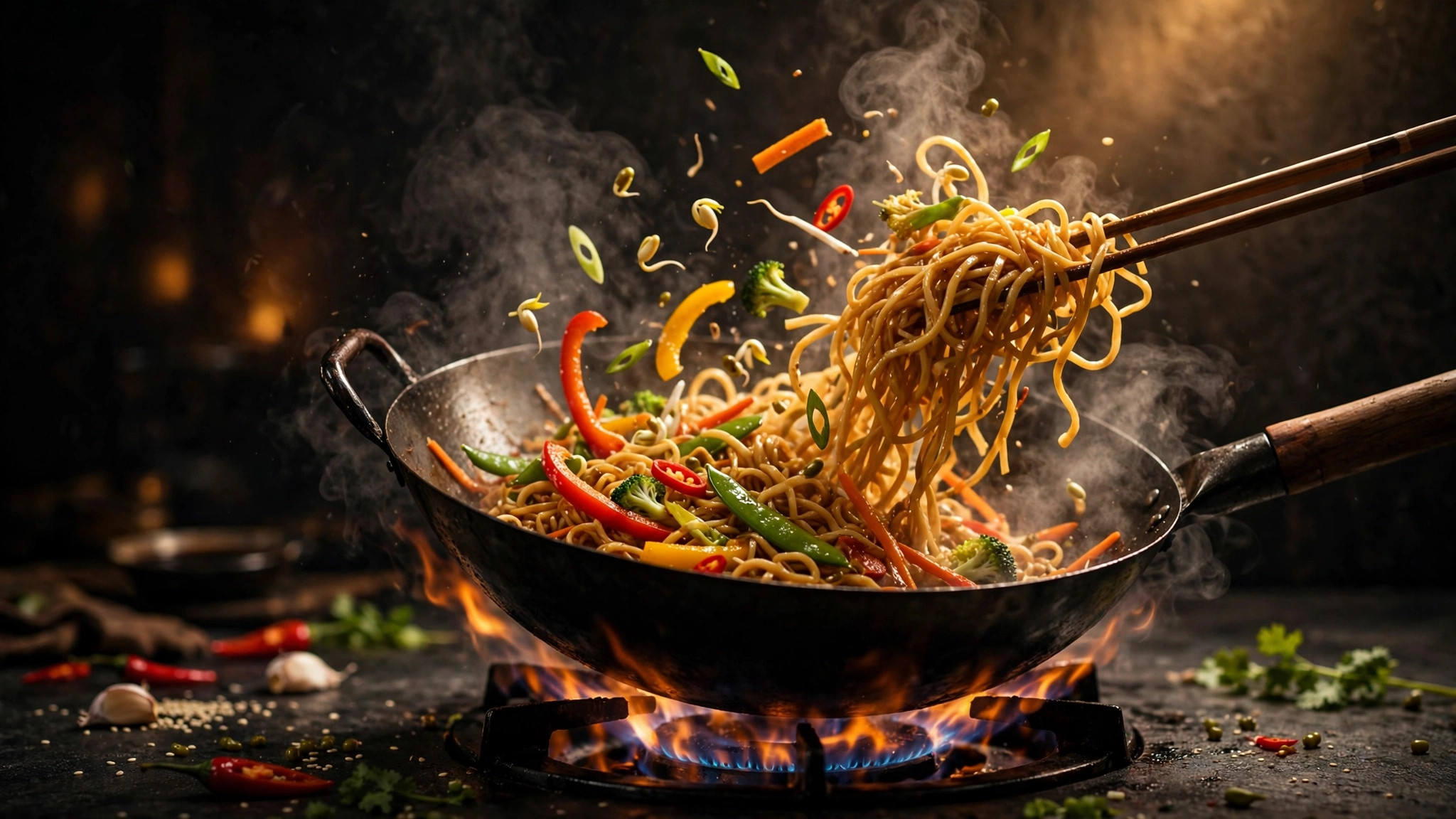
Use a big pot of water at a rolling boil — the noodles need room to move. Do not add oil; it stops the broth clinging to the noodles. Cook for slightly less time than the packet says, because the noodles will soften further in the hot soup. For soup ramen, lift the noodles out, shake off the water well (excess water dilutes your broth) and add them straight to the bowl. Do not rinse noodles destined for hot soup; rinsing washes away the surface starch that helps the broth coat them. Then top, serve and eat at once.
Frequently Asked Questions
What are the best noodles for ramen at home?
Fresh ramen noodles give the best texture and flavour, followed by good-quality dried ramen noodles. Premium air-dried instant noodles are the best budget option.
Can I use instant noodles for homemade ramen?
Yes. Premium instant noodles work well with homemade broth. Cook them just until they separate and stay firm, and add them to the broth at the last moment so they do not go soft.
Are fresh ramen noodles better than dried?
Fresh noodles have a springier bite and richer wheat flavour, but good dried noodles are close behind and far more convenient. Both are much better than using spaghetti or rice noodles.
How long do you cook fresh ramen noodles?
Fresh ramen noodles usually need only one to two minutes in boiling water. Start tasting after one minute — they should be springy with a slight firmness in the centre.