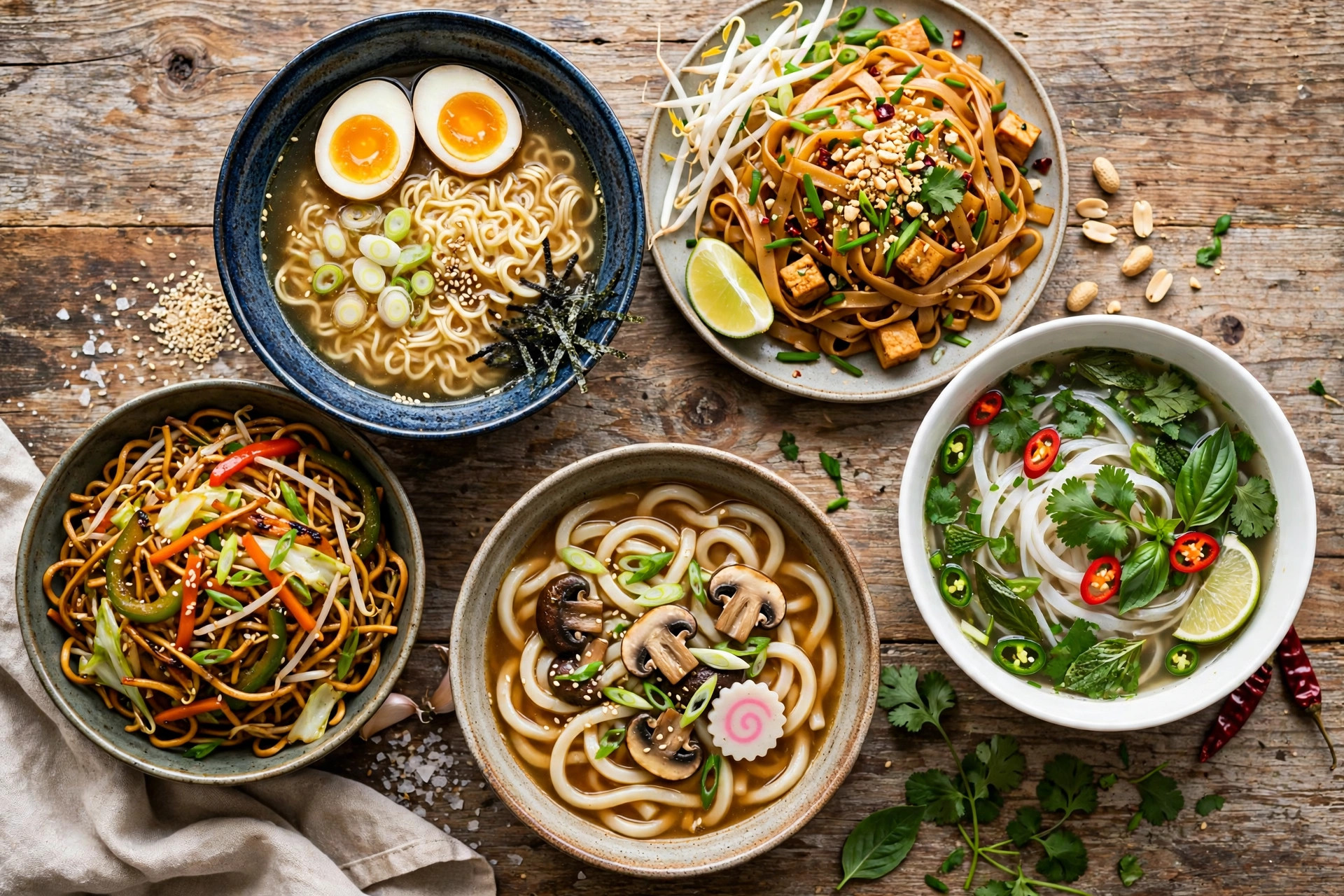









Udon noodles are the thick, chewy wheat noodles at the heart of some of Japan’s most comforting dishes. Served in a hot dashi broth, chilled with a dipping sauce, or stir-fried with vegetables, udon is one of the most versatile noodles in the world — and one of the easiest to cook well at home. This guide covers what udon noodles are, the main types, how to cook them perfectly, and the classic dishes worth trying first.
What Are Udon Noodles?
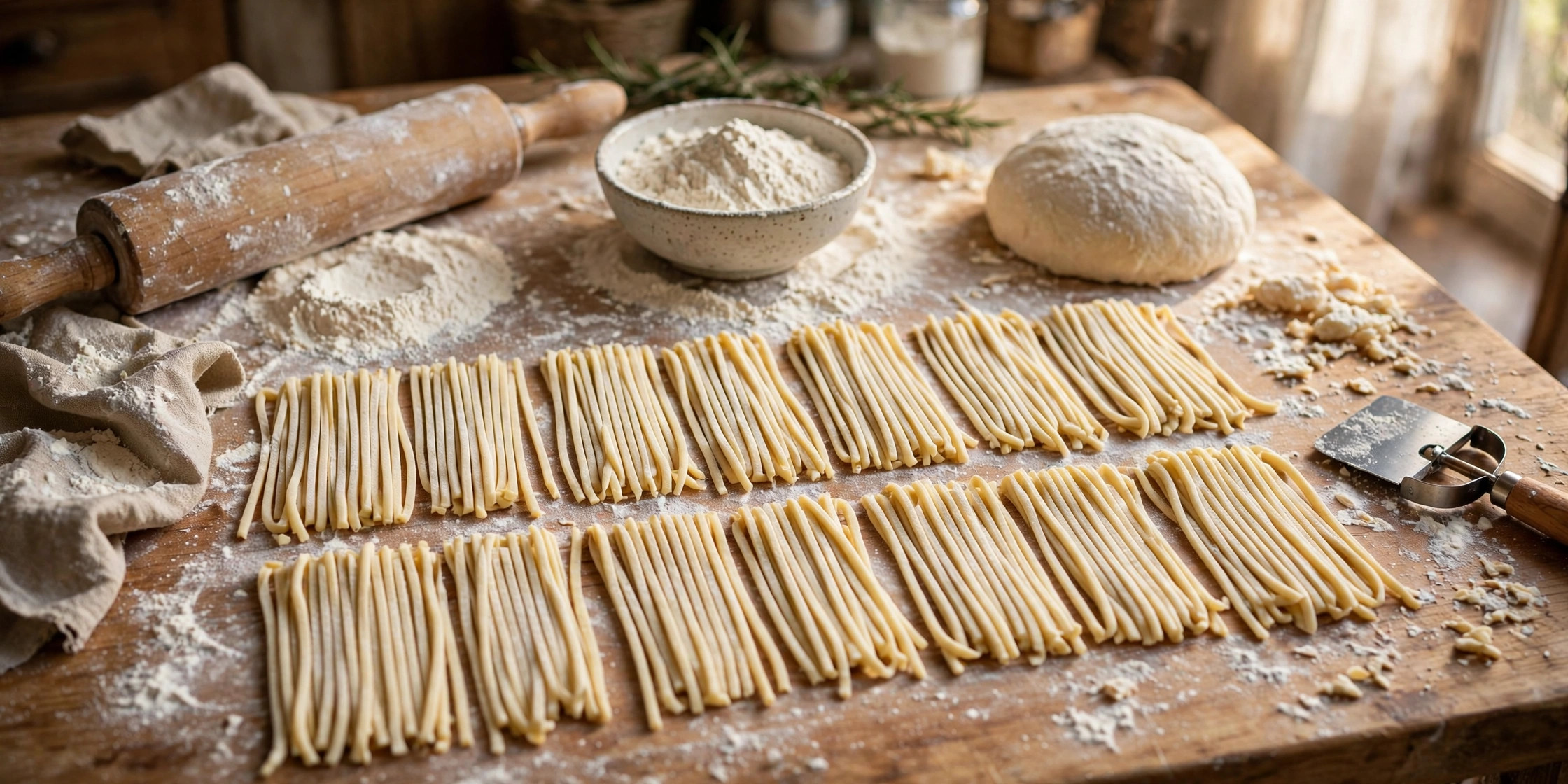
Udon is a type of thick noodle made from wheat flour, water and salt, kneaded into a smooth, elastic dough and cut into strands. A standard udon noodle is around 2–3 mm thick once cooked, with a soft, springy bite that is quite different from thin ramen noodles or buckwheat soba. According to Wikipedia’s article on udon, the noodle became established in Japan centuries ago and developed strong regional styles, the most famous being Sanuki udon from Kagawa Prefecture on Shikoku, known for its firm, chewy texture.
The flavour of udon itself is mild, which is the point: the noodle is a vehicle for broth, sauce and toppings. A classic bowl of kake udon is simply noodles in a hot dashi-based broth with sliced spring onions — proof that good udon needs very little dressing up.
Types of Udon Noodles: Fresh, Dried and Frozen
You will find three main forms in shops, and they behave differently:
- Fresh udon — soft, pre-cooked or vacuum-packed noodles from the chiller cabinet. Quick to prepare (usually 1–3 minutes in boiling water) with a pleasant chew.
- Dried udon — shelf-stable bundles, thinner than fresh once cooked. Convenient and cheap, but the texture is usually less bouncy; cook for 8–11 minutes depending on thickness.
- Frozen udon — widely considered the best option for home cooks. Individually frozen blocks of cooked noodle keep their firm, springy texture, and go straight into boiling water for about a minute.
If you are buying udon noodles for the first time, frozen Sanuki-style udon gives the closest result to a noodle bar in Japan.
How to Cook Udon Noodles Perfectly
- Use plenty of water. Udon releases starch; a large pot stops the noodles sticking and keeps the water at the boil.
- Boil, don’t simmer. Add the noodles to fully boiling water and stir once to separate them.
- Follow the pack time, then test. Frozen udon needs about 1 minute, fresh 1–3 minutes, dried 8–11 minutes. The noodle should be tender with a slight springy resistance.
- Rinse for cold dishes, don’t rinse for hot soup. For chilled udon, rinse under cold water to stop the cooking and firm up the texture. For hot broth, drain and add straight to the soup so the noodles stay hot and absorb flavour.
- Serve immediately. Udon keeps softening in hot liquid, so bowls should go to the table at once.
Classic Udon Dishes to Try
- Kake udon — the classic: hot dashi broth, noodles, spring onions.
- Kitsune udon — topped with sweet seasoned fried tofu (aburaage).
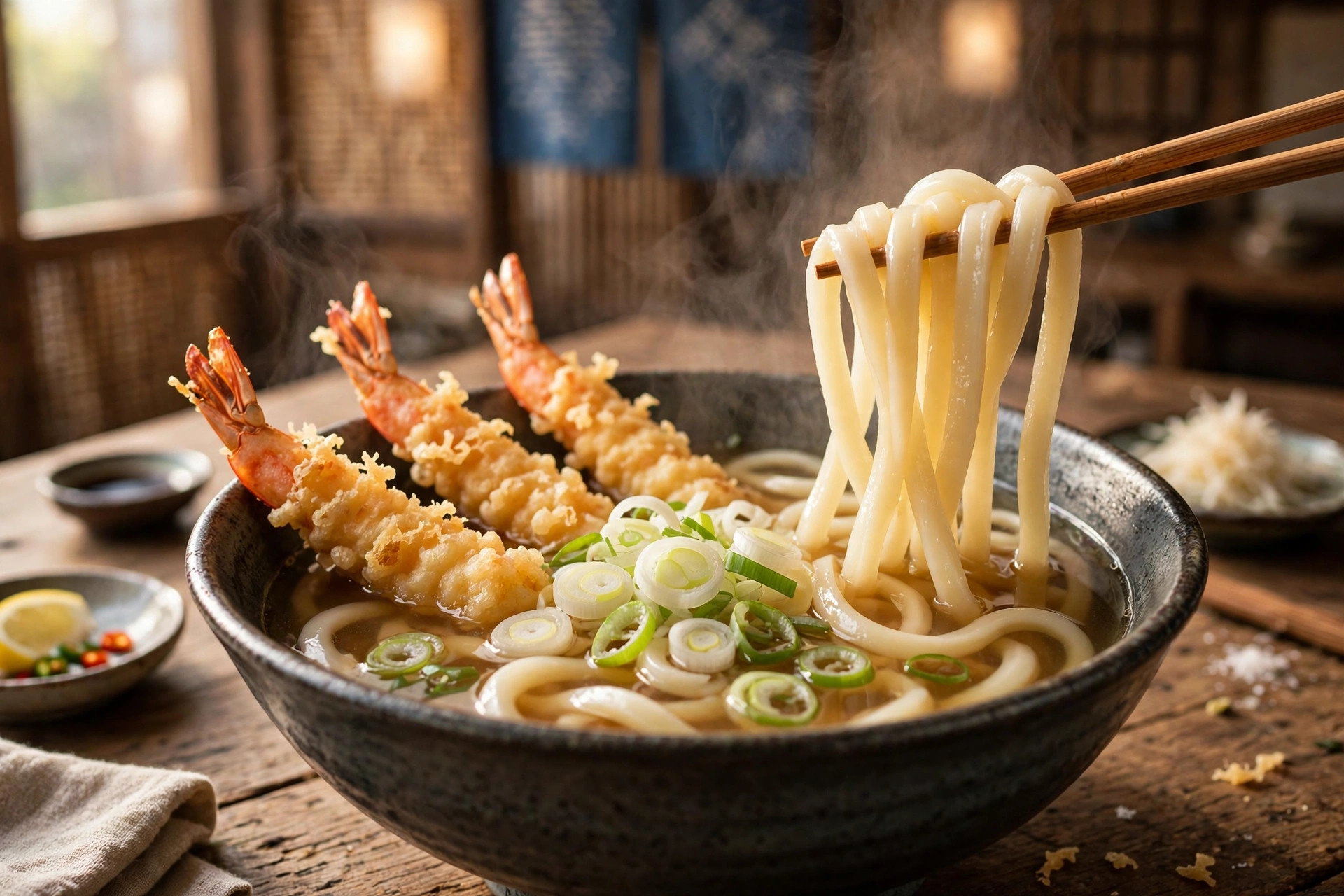
- Tempura udon — served with crisp prawn or vegetable tempura on top.
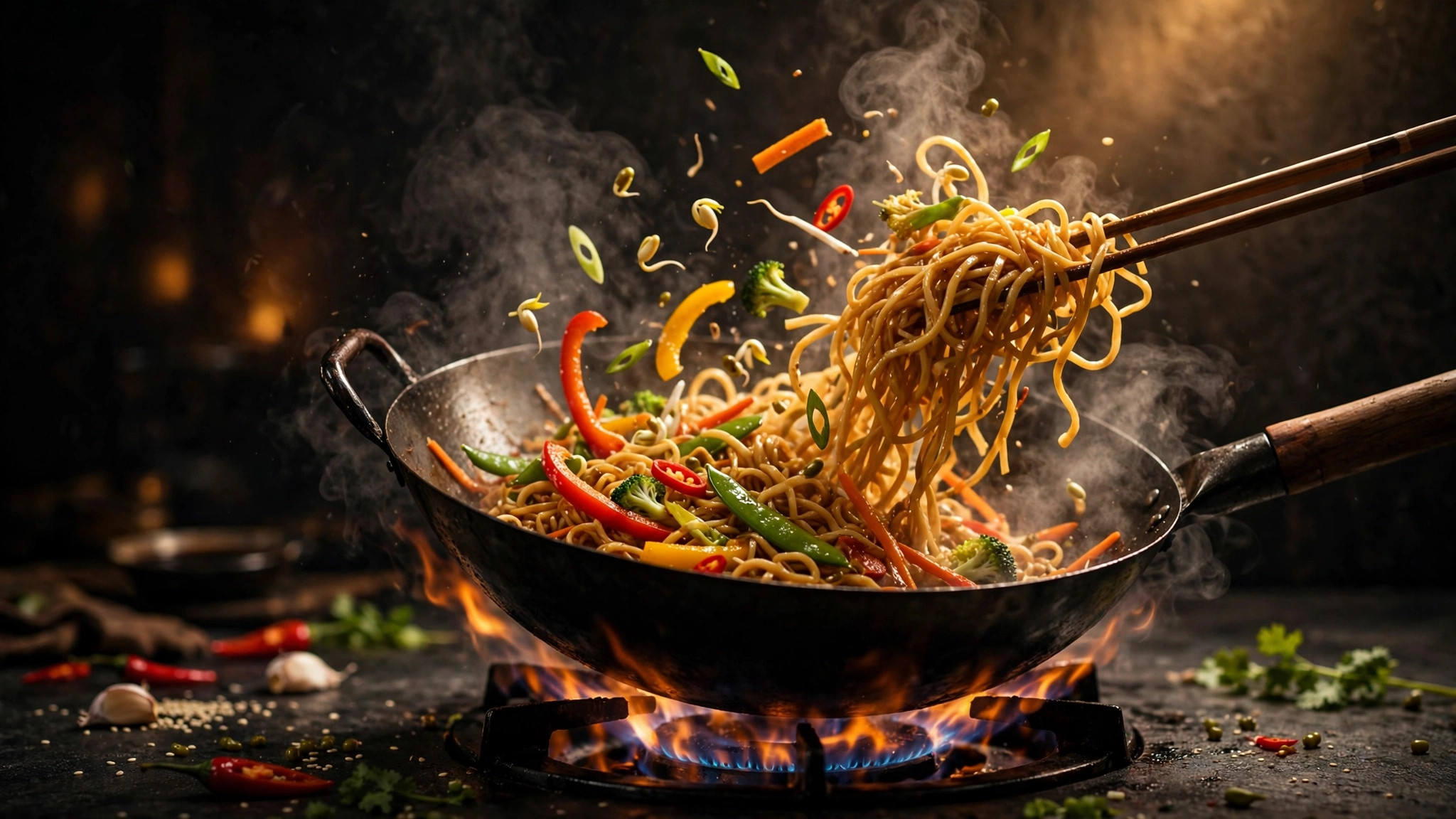
- Yaki udon — stir-fried udon noodles with vegetables, protein and a savoury soy-based sauce; a brilliant weeknight dinner.
- Nabeyaki udon — a hearty hot-pot style bowl with egg, chicken and vegetables.
- Zaru udon — chilled noodles on a bamboo tray with a concentrated dipping sauce, eaten cold in summer.
Udon vs Soba vs Ramen: What’s the Difference?
Udon is thick, pale and wheat-based with a soft chew. Soba is thin, grey-brown and made from buckwheat, with a nutty flavour and a firmer, more delicate texture. Ramen noodles are thinner than udon, yellowish from alkaline water (kansui), and springy rather than soft. Each suits different dishes: udon for hearty broths and stir-fries, soba for light cold dishes, ramen for rich, fatty soups.
Are Udon Noodles Healthy?
Udon is a wheat noodle, so it is mostly carbohydrate — roughly 250–300 calories for a cooked serving, with moderate protein and very little fat. Like pasta, it fits comfortably into a balanced diet; what surrounds it matters more. A clear dashi broth with vegetables and tofu is a light meal, while tempura toppings and rich sauces add calories. Whole-wheat udon is available in some shops and adds fibre. People who avoid gluten should note that udon is wheat-based — rice noodles are the natural substitute.
Frequently Asked Questions
How long do udon noodles take to cook?
Frozen udon takes about 1 minute in boiling water, fresh udon 1–3 minutes, and dried udon 8–11 minutes. Always test a strand — it should be tender with a slight spring.
Can you stir-fry udon noodles?
Yes. Yaki udon is one of the most popular ways to eat them. Use frozen or fresh udon, loosen them briefly in hot water, then stir-fry over high heat with vegetables, protein and sauce.
Are udon noodles vegan?
The noodles themselves are made from wheat flour, water and salt, so they are usually vegan. Check the broth and toppings, as dashi is often made with fish.
What is the best substitute for udon noodles?
Thick wheat noodles or even spaghetti cooked with a teaspoon of bicarbonate of soda in the water gives a similar chew. Rice noodles work for a gluten-free option, though the texture is softer.
Where can you buy udon noodles in the UK?
Most large supermarkets stock dried and fresh udon, and Asian supermarkets carry the frozen Sanuki-style blocks that give the best texture.
The Bottom Line
Udon noodles are simple, satisfying and hard to get wrong: buy frozen if you can, boil briefly in plenty of water, and serve at once in a good broth or a hot stir-fry. Start with kake udon or yaki udon, and you will see why these thick wheat noodles have been a Japanese staple for centuries.