







There is a moment, the first time you make them, when a bowl of flour and water turns into a pile of silky, springy noodles — and shop-bought dried noodles never taste quite the same again. Homemade noodles sound like a project for patient grandmothers and television chefs, but the truth is friendlier: the dough has three ingredients, the technique takes ten minutes to learn, and no special machine is required. If you can knead bread dough, you can make noodles tonight.
The Basic Dough: Three Ingredients
For about four servings you need 300 grams of plain or bread flour, 150 millilitres of water and half a teaspoon of salt. Bread flour gives a chewier noodle; plain flour gives a softer one; a half-and-half mix is a happy middle. The dough should feel firm — firmer than bread dough — because noodle dough that is too wet turns sticky and tears. Add the water gradually: flour absorbs differently depending on the weather and the brand, and you can always add a spoonful more, while rescuing a soggy dough means starting again with extra flour and guesswork.
Step by Step: Mix, Knead, Rest
Stir the flour and salt together, add the water and mix to a shaggy mass, then knead for eight to ten minutes until the dough is smooth and elastic, like a firm earlobe. This kneading builds the gluten that makes noodles springy instead of flabby, so do not shortcut it. Then cover the dough and rest it for at least thirty minutes — an hour is better. Resting relaxes the gluten, and dough that fought you during rolling will suddenly roll out thin and obedient. Skipping the rest is the number one beginner mistake.
Rolling and Cutting
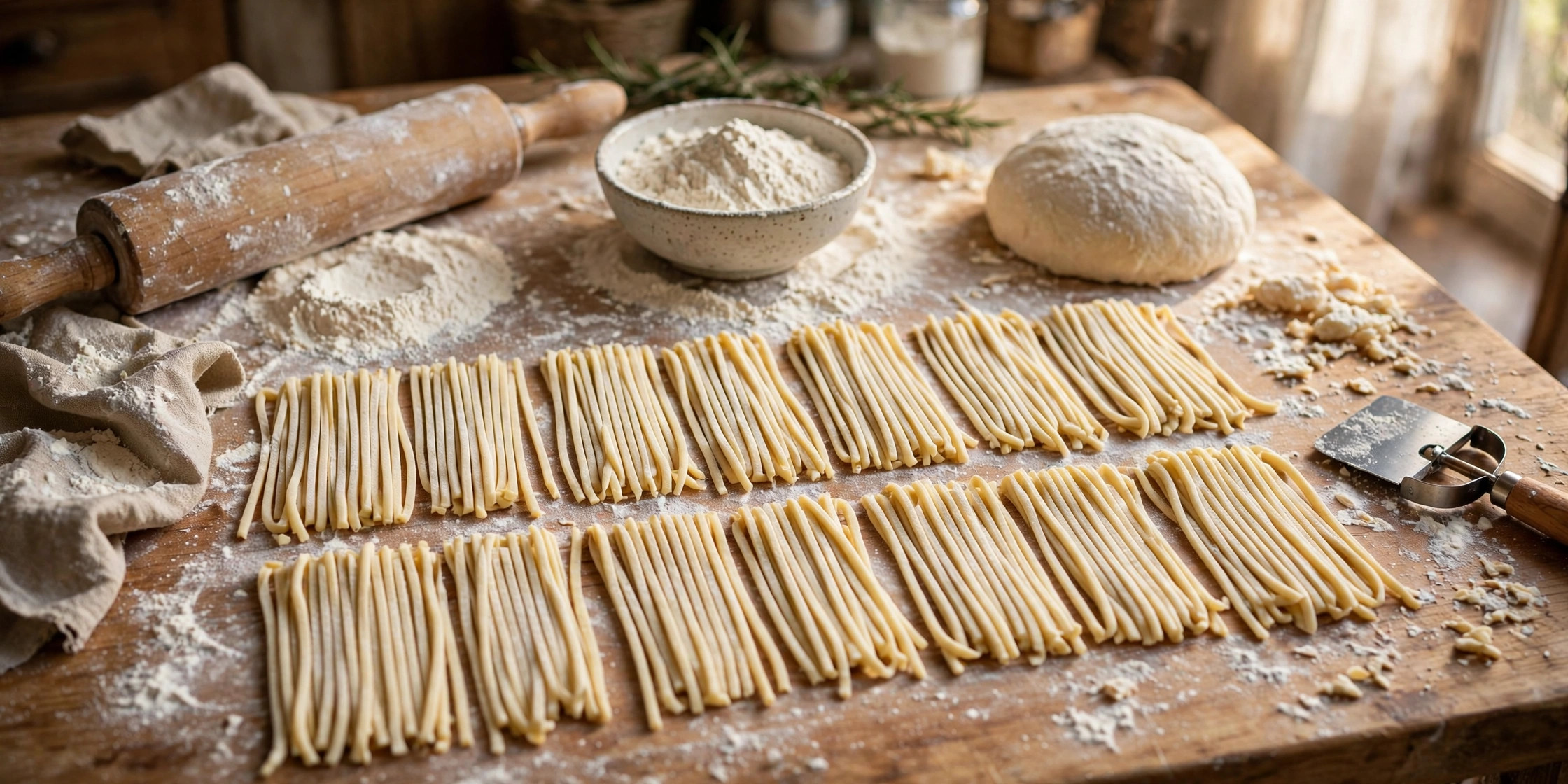
On a floured surface, roll the dough into a sheet about two millimetres thick — thinner for delicate soup noodles, thicker for hearty ones. Dust the sheet generously with flour or fine cornmeal, fold it loosely into a concertina, and slice across the folds with a large sharp knife. Thin strands for soup, ribbons of a centimetre for stir fries, wide belts of three centimetres for rustic hand-torn style dishes. Unfold the cut noodles gently, shake off the excess flour and lay them in loose nests so they do not stick together while you finish the batch.
Two Variations Worth Knowing
For egg noodles, replace half the water with two beaten eggs; the dough turns golden, richer and slightly more tender, perfect for broths and buttered side dishes. For ramen-style chew, dissolve a pinch of baked baking soda — baking soda baked in a low oven until it turns more alkaline — in the water; this nods to the kansui used in Chinese and Japanese noodle making, a tradition that reaches its peak in lamian, the famous hand-pulled noodles of China, where masters stretch a single piece of dough into hundreds of strands. Your first batch will not look like that, and it does not need to.
Cooking Fresh Noodles
Fresh noodles cook fast — usually one to three minutes in a large pot of boiling water, depending on thickness. They are done when they float and lose their raw, floury taste, so start tasting early. Drain them straight into your soup, sauce or wok; like all fresh pasta they keep cooking in residual heat, so a minute under is better than a minute over. If they must wait, rinse briefly in cold water and toss with a few drops of oil.
Storing Homemade Noodles
Loose nests of fresh noodles keep in the fridge for up to two days, well dusted with flour and covered. For longer storage, freeze the nests on a tray until solid, then bag them; cook from frozen, adding a minute to the time. The dried-out edges of fridge-stored noodles are normal — trim any that look grey or smell sour, and when in doubt, make a fresh batch: it only takes flour, water and salt.
Frequently Asked Questions
What flour is best for homemade noodles?
Bread flour gives the chewiest, springiest noodles thanks to its higher protein. Plain flour makes softer noodles. A 50/50 mix of the two is a reliable all-purpose choice for beginners.
Can I make noodles without a pasta machine?
Yes. A rolling pin, a floured surface and a sharp knife are all you need. Roll the dough thin, fold it loosely and slice it into strands — the classic method used for centuries before machines existed.
How long do homemade noodles take to cook?
Fresh noodles cook in one to three minutes in boiling water, depending on thickness. Start checking after one minute; they are ready when tender with a slight springy bite and no raw flour taste.
Can you freeze homemade noodles?
Yes. Freeze the portioned noodle nests on a floured tray until solid, then store them in a bag for up to a month. Cook them from frozen, adding about a minute to the usual cooking time.