







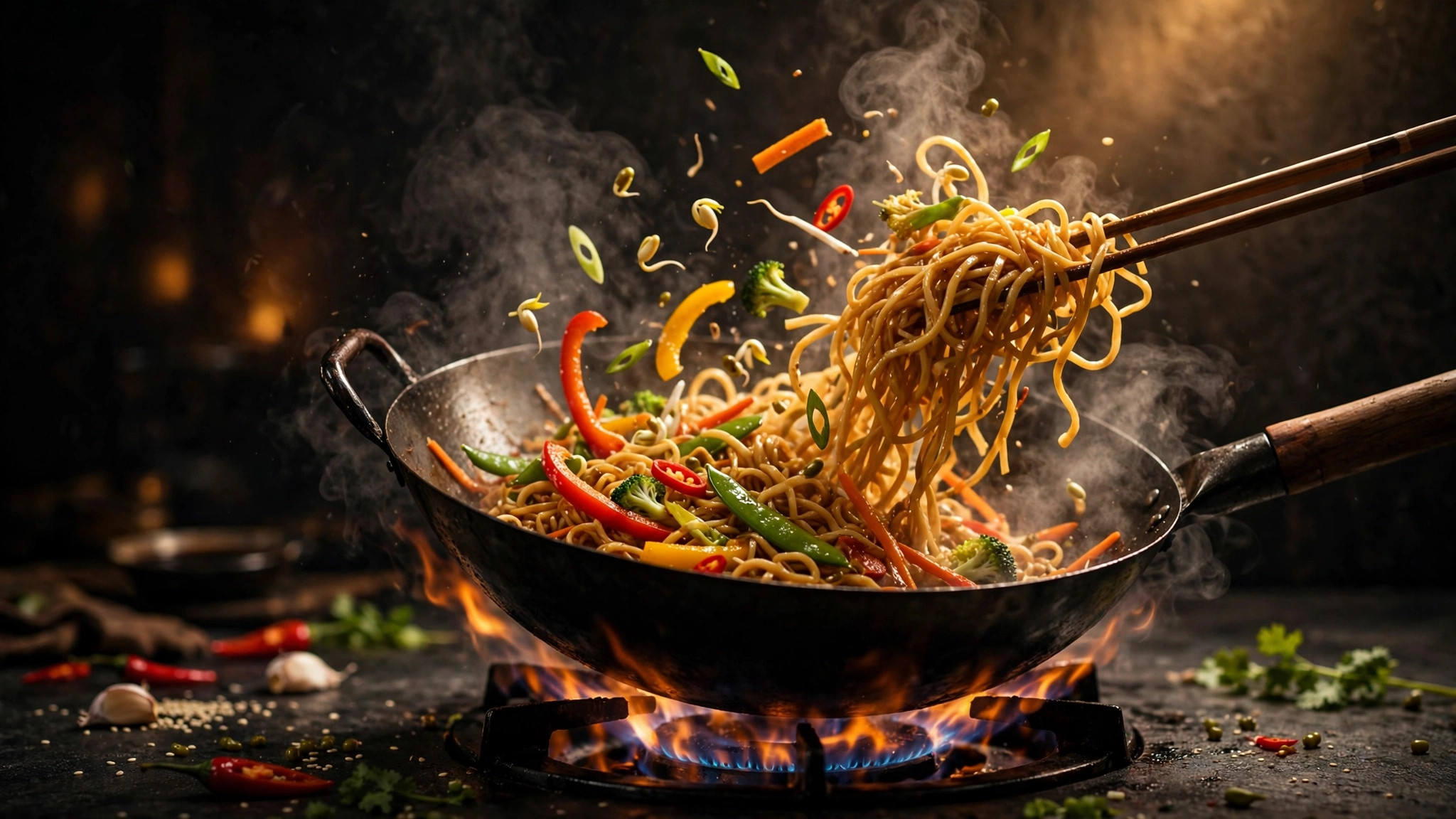
A great stir fry is fast, fiery and full of contrast — and the noodles carry the whole dish. Choose the wrong ones and you get a sticky clump that steams instead of fries; choose well and every strand comes out glossy, separate and coated in sauce. So what are the best noodles for stir fry? It depends on the dish you are making, but a few types win again and again. Here they are, plus the preparation tricks that make the real difference.
What Stir Fry Noodles Need to Do
Stir frying is brutal treatment: very high heat, constant tossing and a sauce that must cling rather than pool. The best noodles for stir fry are sturdy enough to survive the wok without snapping or going mushy, springy enough to stay separate, and just rough enough on the surface to hold onto sauce. Thickness matters too — thin noodles suit light, soy-based sauces, while thick noodles stand up to rich, sweet or spicy ones.
The Best Noodles for Stir Fry
Egg Noodles: The Takeaway Classic
Fresh or dried egg noodles are the noodles behind chow mein and lo mein, and they are the safest all-round choice. They are springy, golden and happy at high heat, and their slight richness loves soy, garlic and sesame. Fresh egg noodles need only a brief blanch; dried ones should be boiled until just underdone, then finished in the wok.
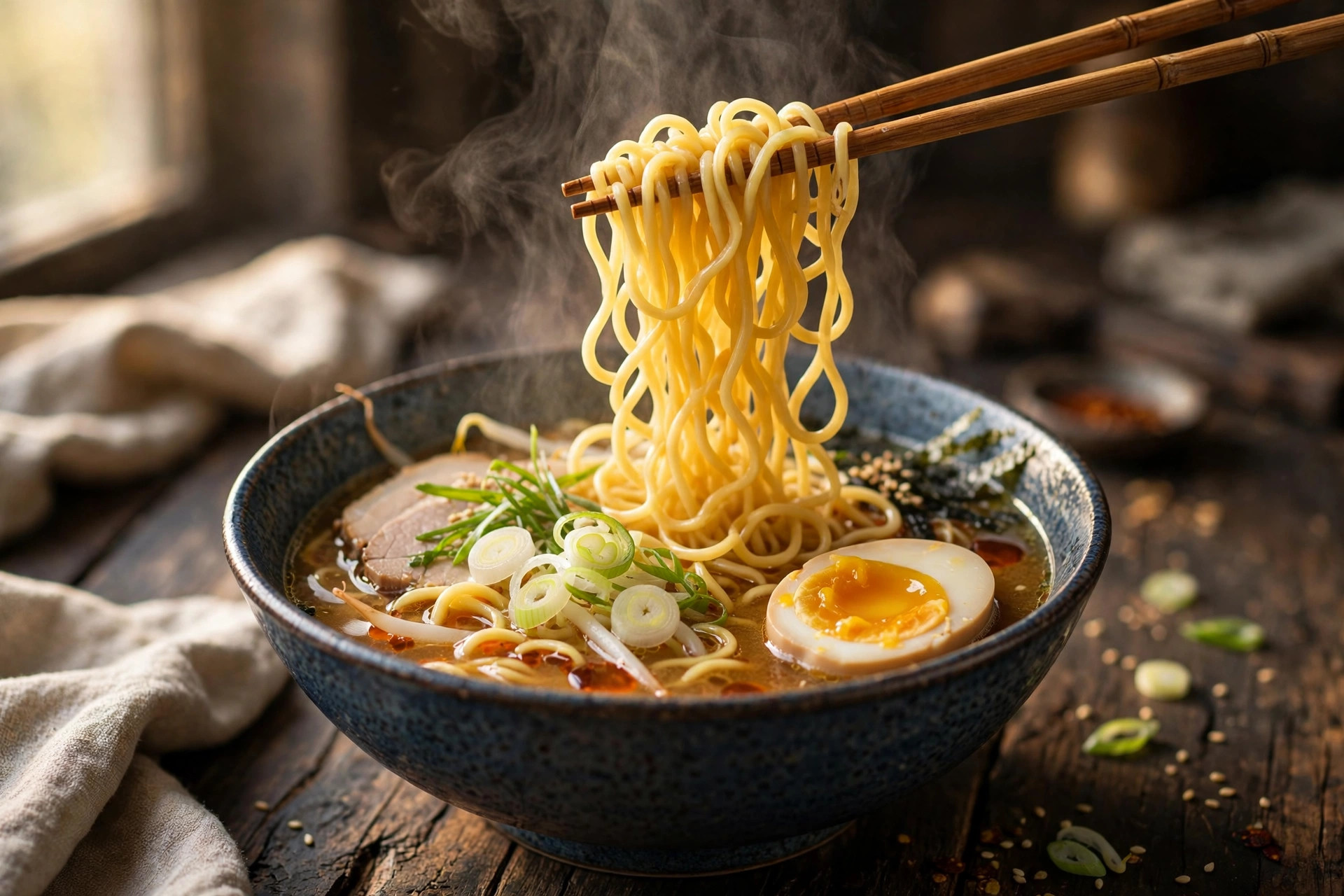
Ramen Noodles: Springy and Sauce-Hungry
The alkaline chew that makes ramen noodles perfect for soup also makes them superb in a stir fry — they stay bouncy, separate well and grab onto sauce. Cook them a minute less than the packet says, rinse briefly in cold water to stop the cooking, and toss them through at the very end.
Flat Rice Noodles: For Char Kway Teow and Pad See Ew
Wide, flat rice noodles are the star of char kway teow and pad see ew, where the edges char slightly against the hot wok and pick up that smoky flavour cooks call wok hei. They are delicate: soak them until pliable rather than boiling, and handle them gently or they will tear. Fresh rice noodles, if you can find them, need no soaking at all.
Udon Noodles: Thick, Chewy and Filling
Japanese udon noodles make a stir fry hearty. Their thick, chewy strands suit sweet-savoury sauces, as in yaki udon, and they are very forgiving for beginners because they are hard to overcook. Frozen udon gives the best texture; boil briefly from frozen, drain well and fry.
Glass Noodles and Soba: The Light Options
Glass noodles (made from mung bean or sweet potato starch) turn translucent, soak up sauce like a sponge and suit lighter, brothy-style stir fries such as japchae. Soba noodles can work in a cold or lightly dressed stir fry, but they are fragile at high heat — treat them gently and add them last.
How to Prepare Noodles for Stir Fry
Preparation is where most stir fries are won or lost. First, undercook: boil or soak noodles until they are just shy of done, because they will cook again in the wok. Second, for wheat and ramen noodles, rinse briefly under cold water after draining — unlike soup noodles, stir fry noodles should have their surface starch washed off so they do not glue together. Third, drain them really well and toss them with a teaspoon of oil; wet noodles steam in the pan and refuse to fry. Finally, have everything chopped and ready before the wok gets hot — a stir fry waits for no one.
Mistakes That Ruin Stir Fry Noodles
The commonest error is an overcrowded pan: too many noodles drop the temperature, and the dish steams into a sticky mass. Cook in batches if you are feeding a crowd. Second, adding cold, wet noodles straight from the colander — drain and oil them first. Third, drowning the dish in sauce at the start; add sauce around the hot edges of the wok so it sizzles and coats, a little at a time. And fourth, stirring timidly: toss confidently and keep everything moving.
Frequently Asked Questions
What noodles do Chinese takeaways use for stir fry?
Most takeaway chow mein and lo mein dishes use egg noodles — fresh for the best texture, dried as a pantry standby. Flat rice noodles are used for dishes such as char kway teow and Singapore-style rice noodles dishes use thin rice vermicelli.
Should you rinse noodles for stir fry?
Yes. A brief rinse in cold water stops the cooking and washes off surface starch, which is the main cause of clumping. Drain well and toss with a little oil before the noodles meet the wok.
How do you stop stir fry noodles from sticking together?
Undercook them slightly, rinse, drain thoroughly, toss with a teaspoon of oil, and fry in a properly hot, uncrowded wok. Add the sauce a little at a time around the edges so it coats instead of pooling.
Can I use spaghetti for stir fry noodles?
In an emergency, yes — cook it until just tender and rinse it well. The texture will be softer and less springy than egg noodles, but with a hot wok and a good sauce it makes an acceptable stand-in.